
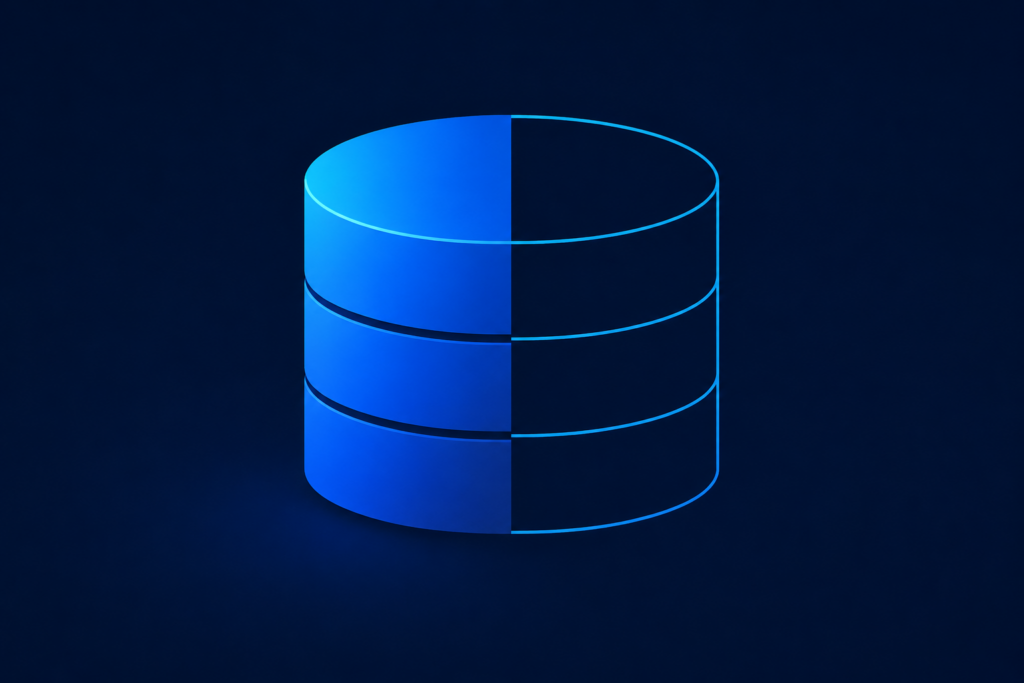
Most managed database users stop at storage. Here’s how to complete the pipeline with streaming and analytics, all from one console.
You picked a managed database for the right reasons. No patching, no replication headaches, no 3 a.m. pages about a failed backup. Your PostgreSQL, MySQL or MongoDB cluster runs, stores, and serves. It does exactly what you asked.
But here is the thing: storing data and understanding data are two different jobs. And right now, roughly nine out of ten managed database customers at OVHcloud stop at storage. They run rock-solid operational databases yet never connect them to a streaming or analytics layer. The data sits there, doing its job, answering application queries, serving the API, while the insights it could generate stay locked inside. No streaming. No real-time analytics. No search across logs or events. Just storage.
That is the missing half.
The gap between storage and insight
Most teams hit this wall at some point. The application database handles transactions, serves the API, keeps the frontend alive. Then someone asks a question the database was never designed to answer. “What are customers doing right now?” “Which features are driving retention this week?” “Can we detect anomalies before they become incidents?”
The reflex is to run analytical queries directly on the production database. It works, briefly, until those queries start competing with the application for resources. Response times creep up, the ops team starts throttling reports, and the data team ends up with a spreadsheet export and a frustrated expression.
The real problem is not the database. It is the absence of everything after it: a streaming layer to move data in real time, and an analytical engine purpose-built for fast, flexible queries. Without those two pieces, the pipeline stops at storage.
What a complete pipeline looks like
A modern data pipeline has three layers, each doing what it does best.
Storage
What you already have. Your managed PostgreSQL, MySQL, or MongoDB handles transactions, enforces consistency, and serves your application. It is your source of truth.
Streaming
The bridge. Apache Kafka captures changes from your database the moment they happen and distributes them to downstream consumers. For teams that need a full change data capture, Debezium can be configured through Kafka Connect, a process we will cover later. Instead of batch exports or nightly ETL jobs, your data flows continuously. Every insert, update, and delete becomes an event that other systems can act on in real time. Kafka is not just a transport layer: it decouples your producers from your consumers, which means you can add new downstream use cases without touching anything upstream.
Analytics
Where data becomes answers. ClickHouse processes millions of rows per second for OLAP workloads: dashboards, aggregations, time-series analysis. OpenSearch handles full-text search, log analytics, and observability. Together, they cover the two big post-storage use cases: structured analytics and unstructured search.
Each layer is independent but connected. Your production database stays lean because it is not fielding analytical queries. The analytics engines are optimised for reads at scale, not for transactional consistency, which is exactly the trade-off you want.
This architecture scales in stages. You do not have to build the entire pipeline on day one. Start with Kafka to get your data flowing, then add ClickHouse or OpenSearch when the use case demands it. Each layer adds value without disrupting what came before. That modularity matters, because most teams do not need everything at once. They need the next piece.
How the pieces connect on OVHcloud
OVHcloud offers all three layers as managed services, deployed and operated from the same console.
Start with your existing managed database. Connect Managed Kafka through the OVHcloud console in a few clicks, then add Managed Kafka Connect as the integration layer. Kafka Connect handles the mechanics of pulling change events out of your database and pushing them into Kafka topics. From there, you route events to Managed ClickHouse for analytical queries, Managed OpenSearch for search and observability, or both.
For teams that want to go further, Debezium can be configured on top of Kafka Connect to implement full change data capture (CDC). This means every row-level change in your database is captured as a structured event, preserving the complete history of modifications. Debezium runs as a connector within Kafka Connect, so the infrastructure is already in place.
What you get at the end is a complete pipeline: source of truth, real-time streaming, and fast analytics. All managed. One console for provisioning and monitoring. One bill. One support team that understands the full stack.
When your database, streaming layer, and analytics engines are scattered across different providers, debugging a broken pipeline means opening three dashboards, contacting three support teams, and reconciling three billing cycles. With OVHcloud, the whole chain lives in one place.
What this looks like in practice
Product analytics at a SaaS scaleup
A B2B SaaS company needs to understand how customers use their product in real time. Their managed PostgreSQL database records every user action, but running analytical queries on it directly means competing with the application for resources. Whenever the data team runs a report, response times start spiking.
They add Managed Kafka to capture database change events as they happen, then configure Kafka Connect to route them to Managed ClickHouse. ClickHouse ingests the stream and pre-aggregates it into the materialised views their dashboards need. The product team now sees feature adoption, session lengths, and funnel conversions updated in seconds, not hours, without any additional load on the production database.
New analytical use cases – such as cohort analysis or A/B test reporting – are added as new Kafka consumers without any changes to the application or the source database. The implemented architecture enables the pipeline to grow without touching what already works.
Observability at a cybersecurity scaleup
A cybersecurity company analyses millions of events per day across its platform. Detecting anomalies means searching across weeks of structured and semi-structured data with sub-second response times. Their PostgreSQL operational database stores event metadata reliably, but it was never designed for full-text search at this volume.
Managed Kafka streams event data as it is written to the database, routing it to Managed OpenSearch. OpenSearch indexes everything in real time. The security team can now run complex searches across months of data in milliseconds, set alerts on anomaly patterns, and correlate events across distributed services from a single dashboard.
No separate log management vendor. No data egress fees between services. And because the data never leaves OVHcloud infrastructure, there is no question about where it sits or who can access it.
Why it matters that it is managed (and European)
You chose a managed database because you did not want to babysit infrastructure. The same logic applies to streaming and analytics. Self-hosting Kafka is notoriously complex: broker management, partition rebalancing, schema registries, monitoring, upgrades. ClickHouse and OpenSearch have their own operational weight.
Analytics engineers already spend up to 40% of their time maintaining infrastructure[1] instead of delivering insights. Managed services flip that ratio. With OVHcloud, rolling upgrades run with zero downtime. Automated failover covers availability zones. End-to-end encryption, ISO 27001 and SOC 2 compliance, and a 99.99% SLA are included, not extras.
And because this is OVHcloud, your data remains your data. No extraterritorial exposure, no ambiguity about which jurisdiction governs your data. For teams operating under GDPR or working in regulated industries, this is not a nice-to-have. It is a requirement.
Pricing is transparent and predictable. No data-transfer surcharges between services, no opaque consumption-based billing that spikes when your analytics workload grows. IOPS, traffic and backups are included.
There is also the question of open-source compatibility. Every engine in the OVHcloud managed pipeline runs the real open-source project: Apache Kafka, ClickHouse, OpenSearch. No proprietary forks, no API incompatibilities, no vendor lock-in. Your code, your connectors, and your tooling all work the same way they would against a self-hosted cluster.
Getting started
If you already have a managed database on OVHcloud, the fastest path to a complete pipeline is:
- Provision Managed Kafka from the OVHcloud console. Choose your plan, pick your region, and your cluster is ready in minutes.
- Add Managed Kafka Connect and configure a source connector pointing to your database. This is where your change events start flowing.
- Spin up Managed ClickHouse (for analytics) or Managed OpenSearch (for search and observability), or both, depending on your use case.
- Configure sink connectors in Kafka Connect to route events from your Kafka topics into your analytics engines.
- Query your data. ClickHouse speaks SQL, so your existing BI tools and dashboards plug right in. OpenSearch provides its own dashboards for log exploration and search.
The entire setup can be done from the console, with each service connected through the same management interface. No VPN tunnels to configure between providers, no credential juggling across platforms. For teams comfortable with infrastructure as code, Terraform and the OVHcloud API cover the same ground programmatically.
If you want to explore CDC with Debezium, the Kafka Connect foundation is already there. You configure Debezium as a source connector, and it starts capturing row-level changes from your database into Kafka topics. The managed Kafka Connect infrastructure handles running and scaling the connector itself.
Your database is doing its job. Now to complete the picture.
Nine out of ten managed database customers have not connected their data to streaming or analytics. The operational half works. The insight half is waiting.
The tools are managed, the console is unified, and the pipeline pattern is proven. If you are ready to see what your data can tell you, the missing half is a few clicks away.
Get started with Managed Kafka on OVHcloud
[1] Source: McKinsey: https://www.mckinsey.com/capabilities/tech-and-ai/our-insights/tech-debt-reclaiming-tech-equity

Product Marketing Manager for Databases

Elena Luoto
Creative Copywriter, OVHcloud.
American and French, Elena performs copywriting, editing, storytelling, brand strategy, English teaching, and interview/voiceover work at OVHcloud in Paris.