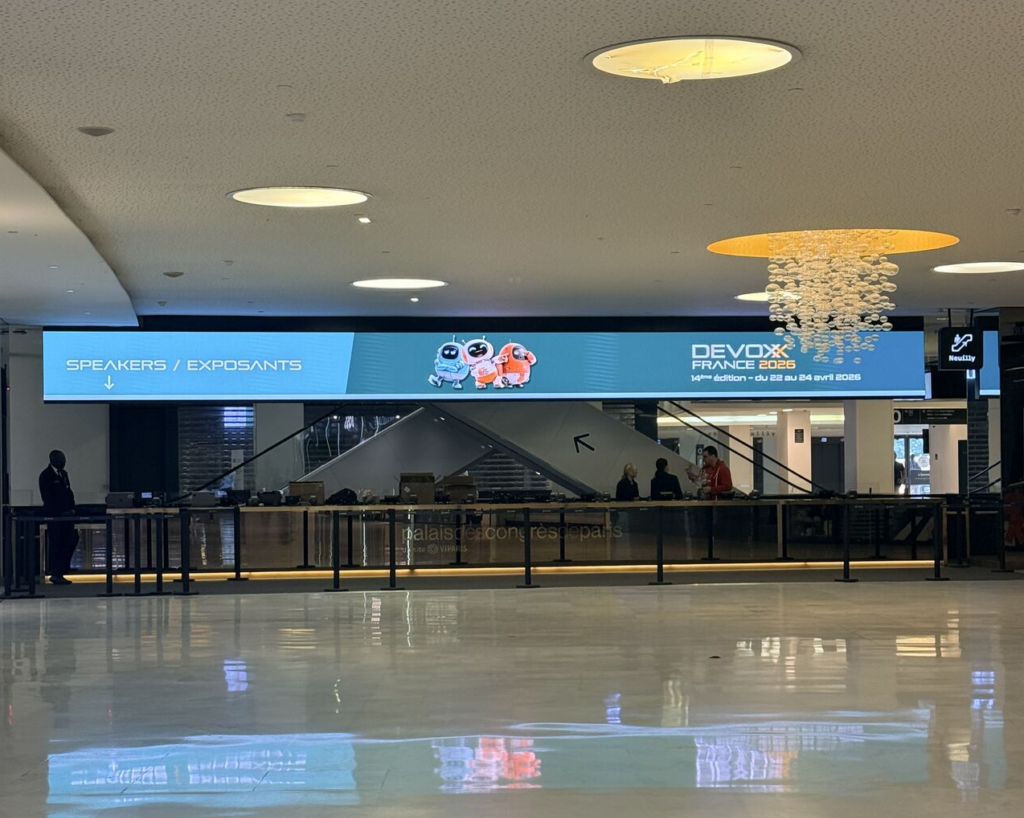
From April 22 to 24, 2026, the Devoxx France conference took place at the Palais des Congrès in Paris.
Aurélie Vache and Stéphane Philippart attended as dit 19 other OVHcloud employees. In this blog post, they share their thoughts and feedback from this 14th edition of Devoxx France.
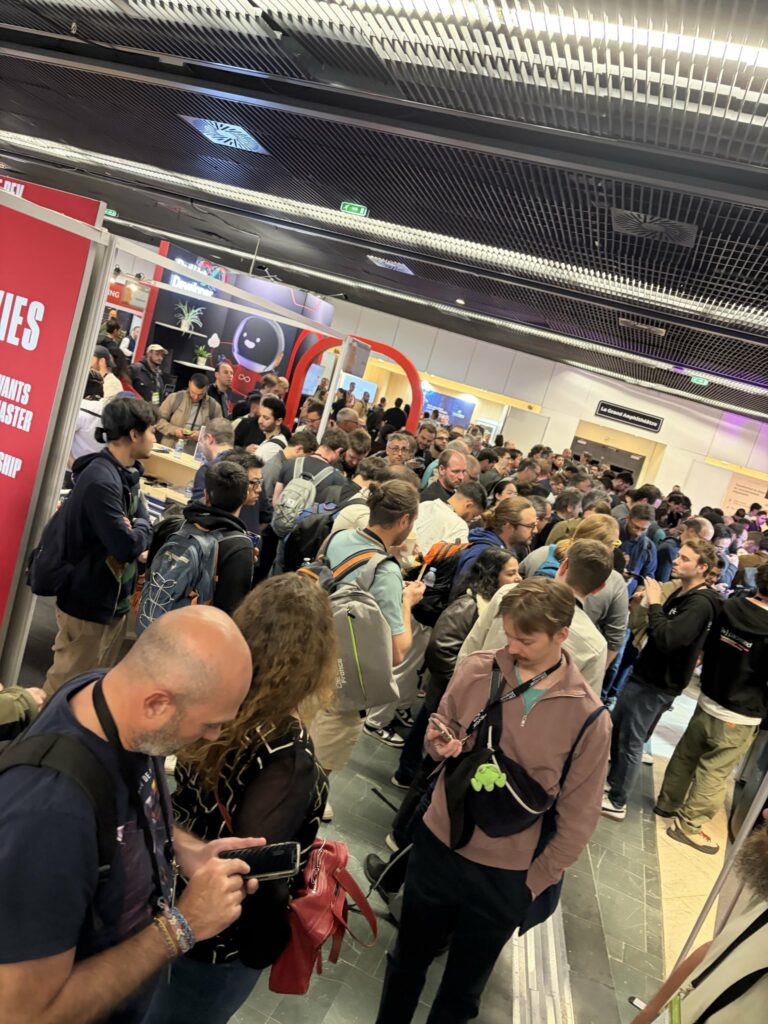
Devoxx France 2026: The AI Edition
Devoxx France 2026 is one of Europe’s biggest independent developer conferences. Formerly focused centrally on Java, over the past few years, the conference has also focused on Architecture, Data & Analytics, Development practices, Front-end & UX, Java/JVM, Security & Privacy, Cloud and non-technical talks about people and culture.
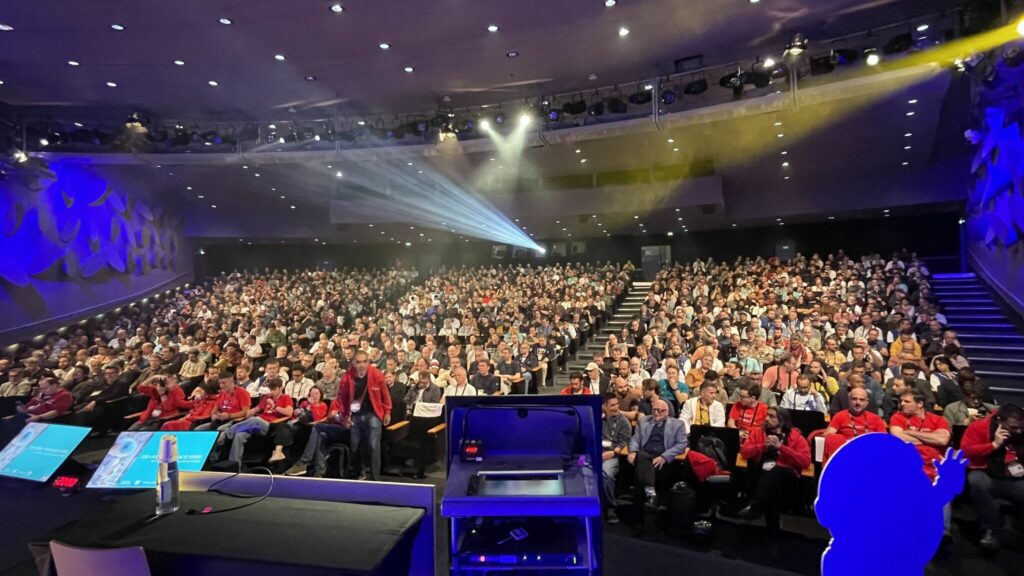
Key figures from the 2026 edition:
- 4,980 attendees (The largest attendance on record)
- 307 speakers
- 259 talks
- 70+ sponsors
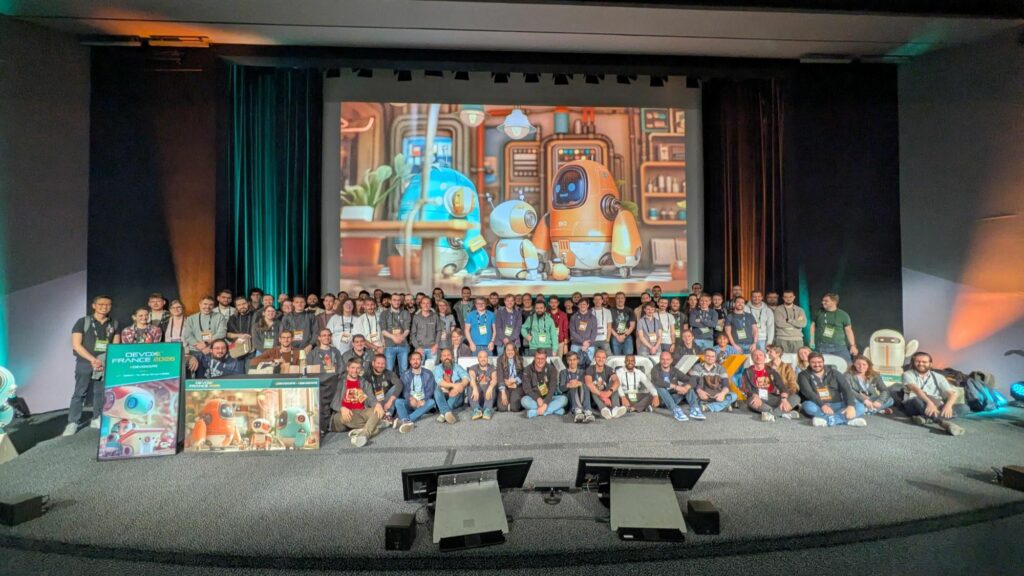
As might be expected, AI was the central theme of this edition, with a large number of the talks focused on AI topics. Indeed, there were 65 sessions out of 259 about AI and Agentic Systems, the most discussed topic!
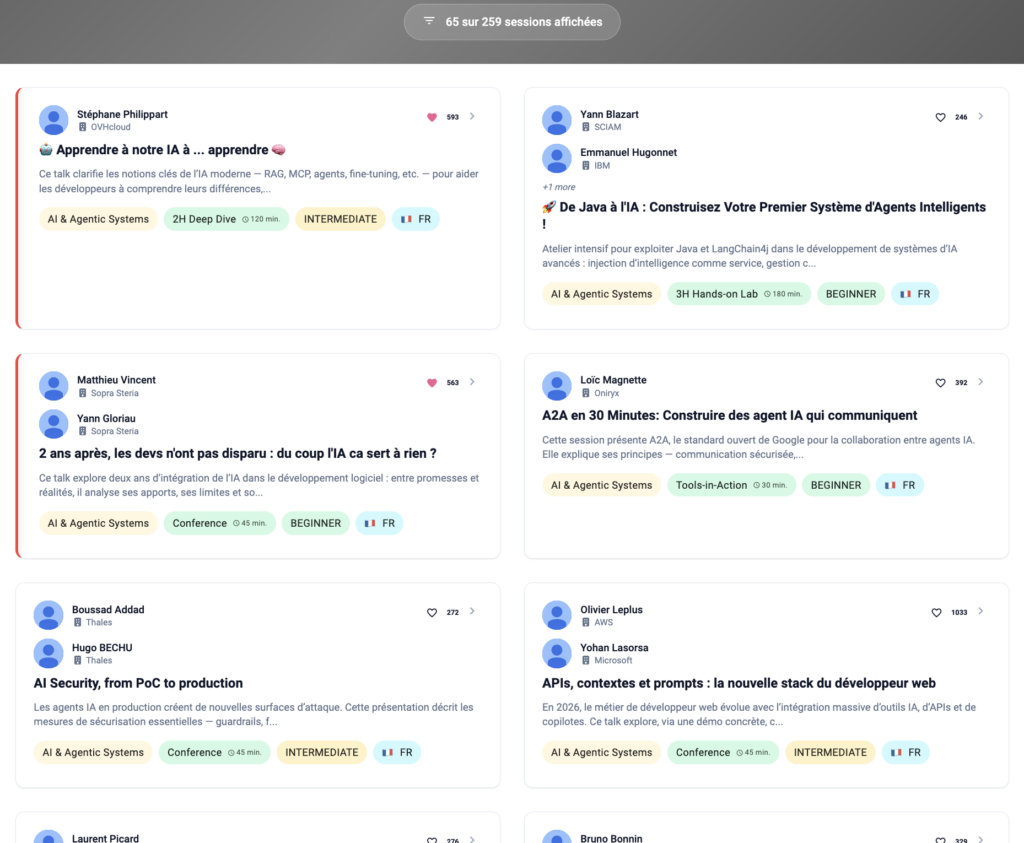
Notably this year, and perhaps even more than in previous years, we could clearly see attendees arriving early to secure seats for their favorite talks. Even so, there ended up being a lot of disappointment – especially on the first day – as several sessions were already at full capacity minutes before they even started.
This was particularly true for sessions featuring multiple OVHcloud speakers 💪.

Keynotes
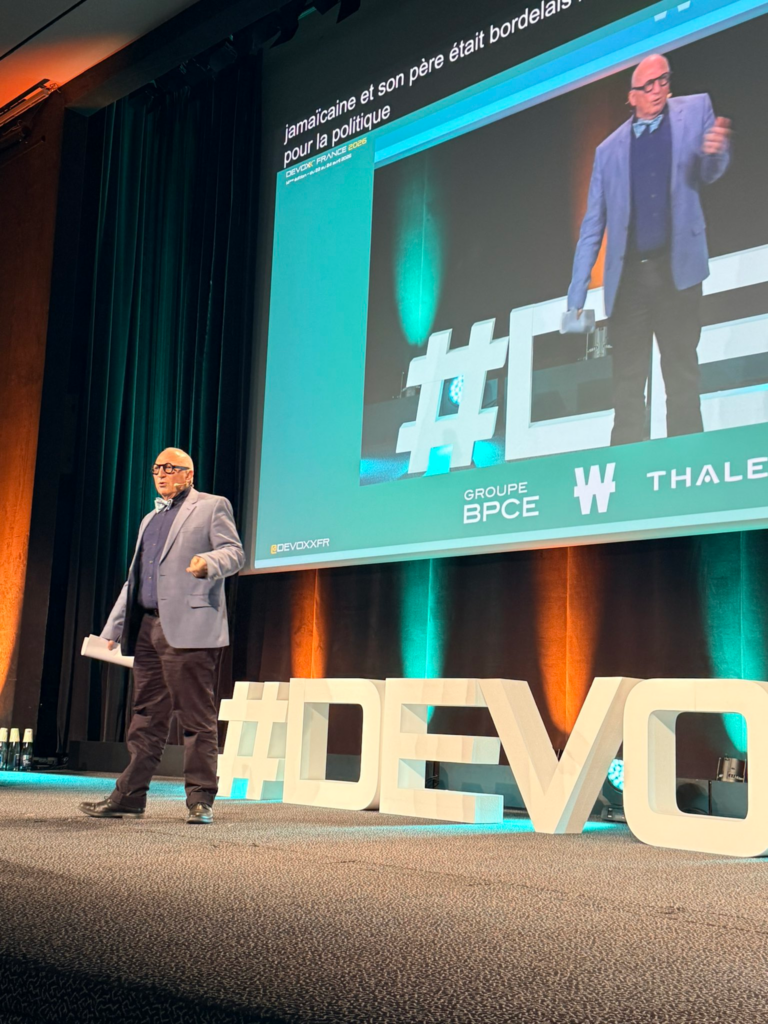
The keynote sessions (“plenary sessions”) were also heavily centered on Artificial Intelligence, but with a notably broader lens beyond pure technology. Rather than focusing only on tools or LLM implementation, the talks explored AI through the intersecting dimensions of power, governance, cybersecurity, human transformation, and geopolitics.
Some highlights from the keynotes:
- “In 50 years, AI has multiplied its power, along with the challenges of governance and cybersecurity” - Laurence Devillers (@lau_devil)
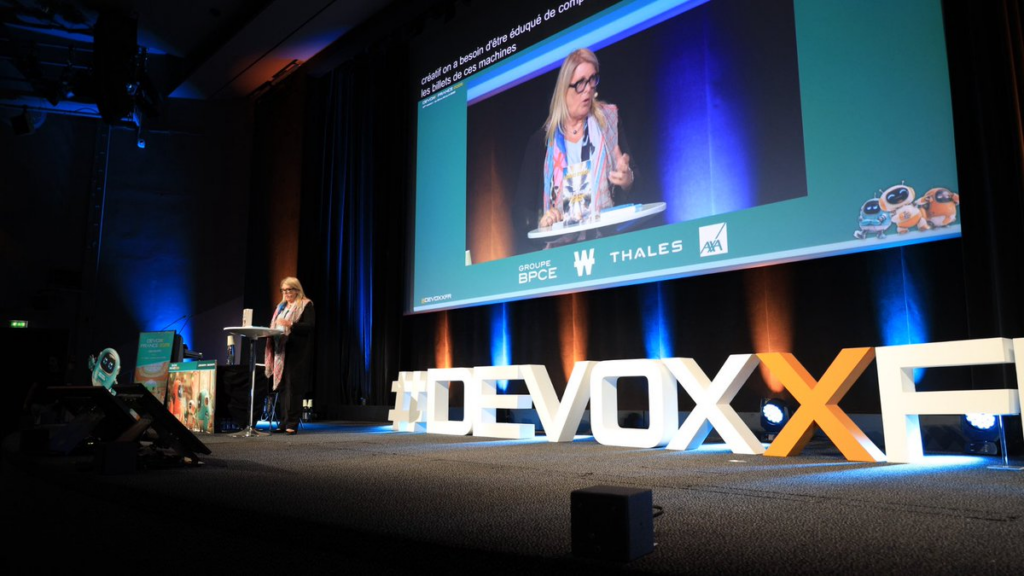
- Jean-Gabriel Ganascia (@Quecalcoatle) questioned the promise of AI as a force that could free humans from effort, raising deeper reflections on what this means for our relationship with work and meaning.
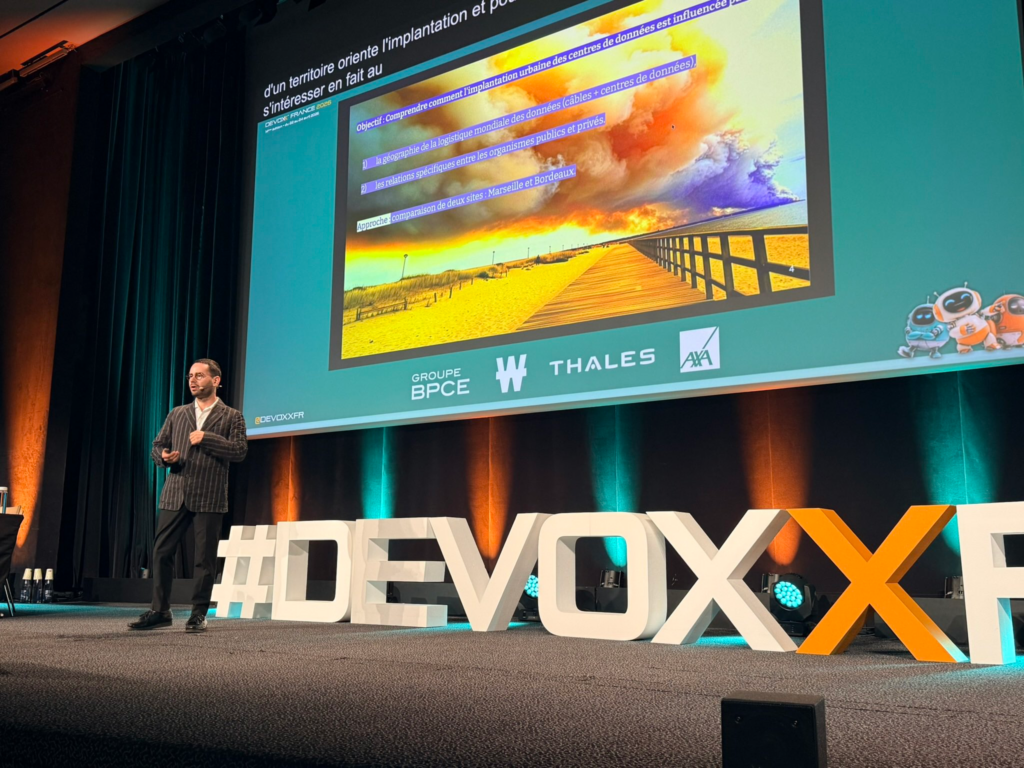
- Loup Cellard (@CellardLoup) examined the implications of foreign investments in AI infrastructure, shedding light on the geopolitical and strategic stakes behind these technologies.
Meet & Greet
Devoxx France consists of three days of conferences, sponsor booths to discover, and Thursday evening’s unmissable annual tradition: the Meet & Greet.
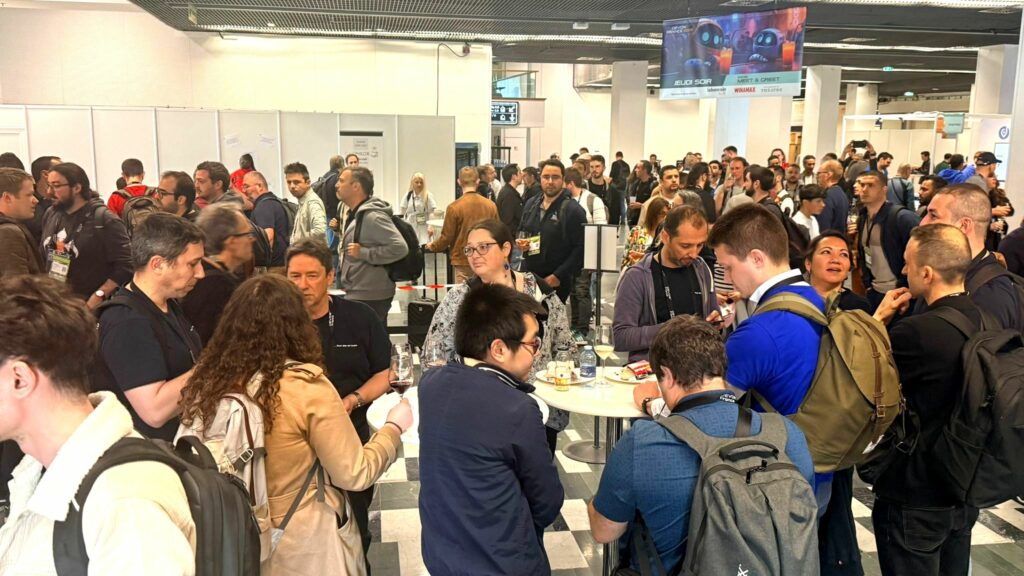
Thursday night’s Meet & Greet is a major community event built around networking and social sessions like BOFs (Birds of a Feather) and seed networking. It’s one of the signature traditions of the conference, beyond talks and sponsor booths.
This evening event is free, open to the public with pre-registration, and offers a genuine moment for connection, sharing, and conversation over a drink and a plate of charcuterie and cheese 😇.
It’s also the opportunity to discover the fun of “Voxx Jam”, the community-party, music-oriented side of Devoxx/Voxxed culture 🎸.
OVHcloud Presence
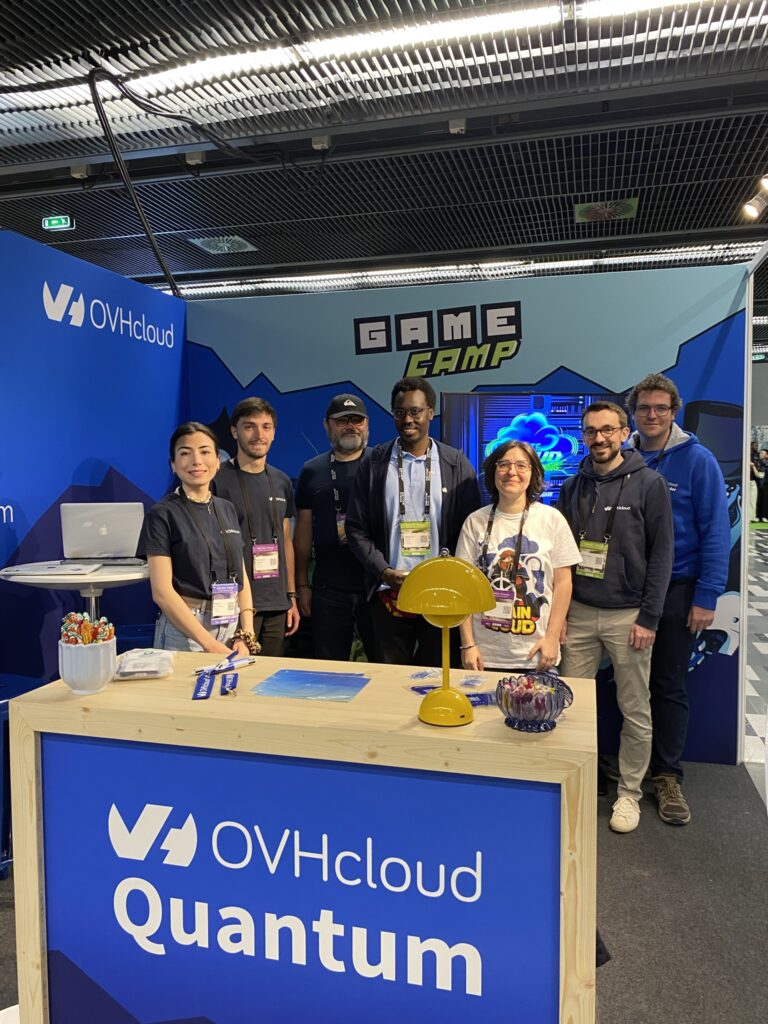
At the OVHcloud booth, we were a team of 8 speakers and 11 colleagues from Tech, HR, and Sales, and their dynamic presence really made a difference. Engaging in topics like AI, Public Cloud, Domain Names, Observability, Quantum technologies, and more, we had many insightful conversations throughout the event.
We also discussed AI topics at the booth, which was of course the main theme of the conference, but not the only one.
A lot of conversations also focused on sovereignty. Three years ago, people were saying: “I don’t care about sovereignty, I’ll just choose the cheapest option.” This year, the tone has clearly changed, “How can we use your sovereign products?”
There is a real shift happening, and once again, being present at events like this is essential to witness and take part in these evolving discussions.
It was truly a top-tier booth experience for all of us💪.
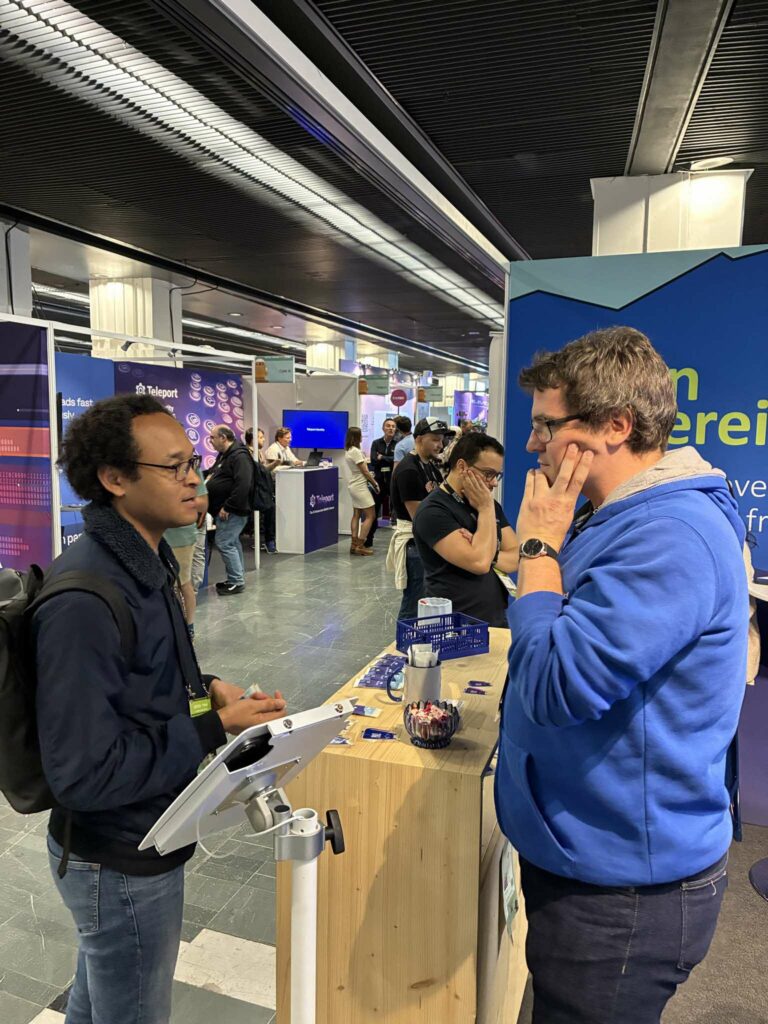
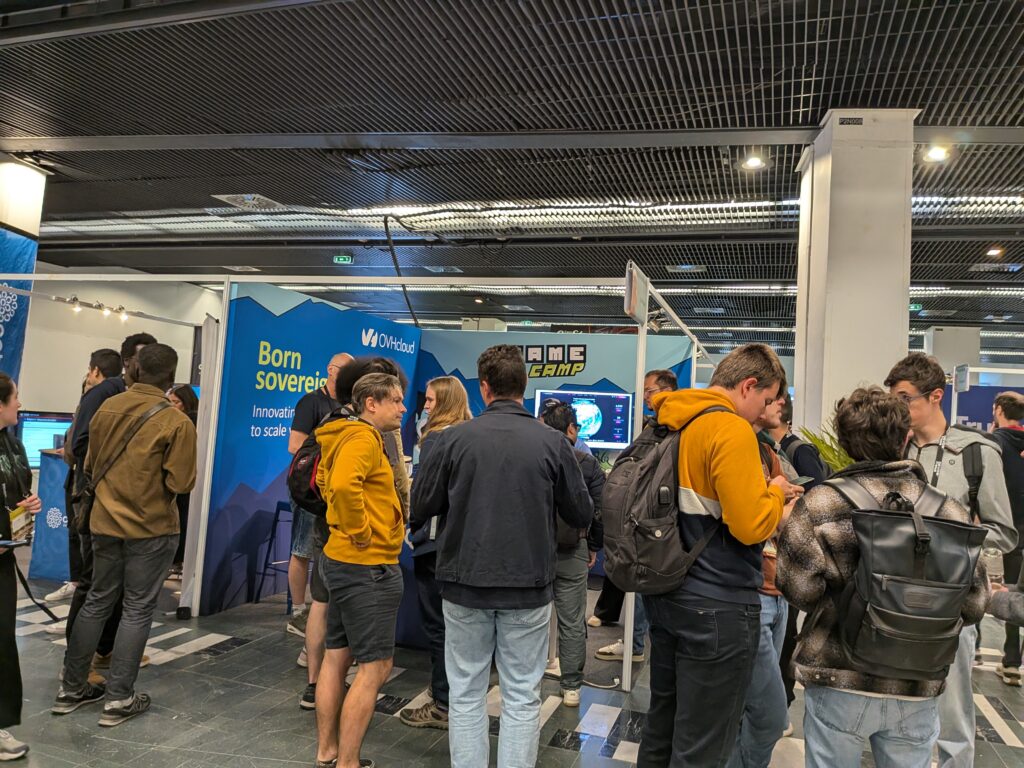
Of course, the goal of our booth was so attendees could discuss with our teams, but also so we could engage them through our very own video game, “Gaming Camp: Beat Cloud Villains!”. The specially designed video game’s description: “Join the fight against the villains of the cloud. Take on Hidden Cost, Jailor Stack, and Autonomous Zero, and prove yourself as a true Guardian of the Cloud.”
Players were welcomed to step into a two-player fighting game inspired by the style of Street Fighter, where strategy and skill are your best weapons. Game on!
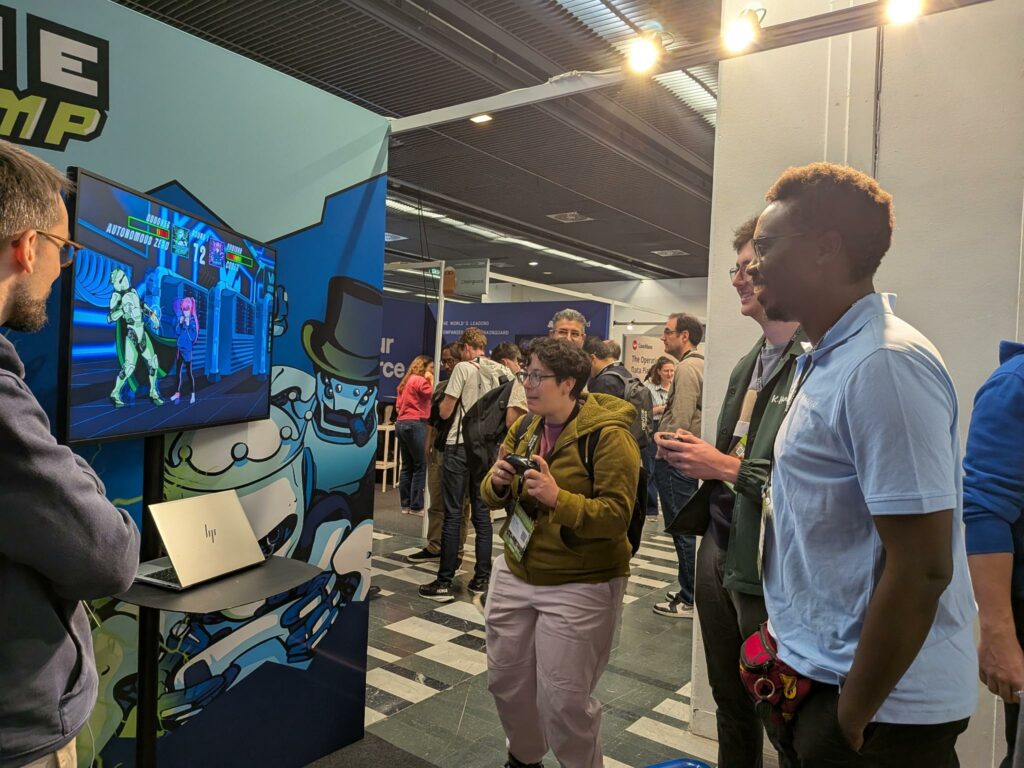
We also wanted to say a word about the success of our Schrödinger cat (Quantum) swag – socks, keychains, badges – they were a huge hit, and often sparked great conversations throughout the event.
OVHcloud Speakers & Talks
Getting accepted to Devoxx France is not easy, so we were proud to be included with 8 speakers and 11 talks! We were the most represented company in terms of talks at Devoxx France 2026, and ranked in the top 3 by number of speakers 💪.
Congratulations to Benoit Masson, Fanny Bouton, Mathieu Busquet, Sébastien Ferrer, Théo Bougé, and Héla Ben Khalfallah, Stéphane Philippart & Aurélie Vache for their talks 👏. A large number of attendees joined, and the sessions were all very high quality.
Find here the topics of their talks:
"Question pour un cluster Kubernetes : Quiz sur Kubernetes & ses concepts"
🏴 "The Ultimate Kubernetes Challenge: An Interactive Trivia Game on concepts, components, usage..."
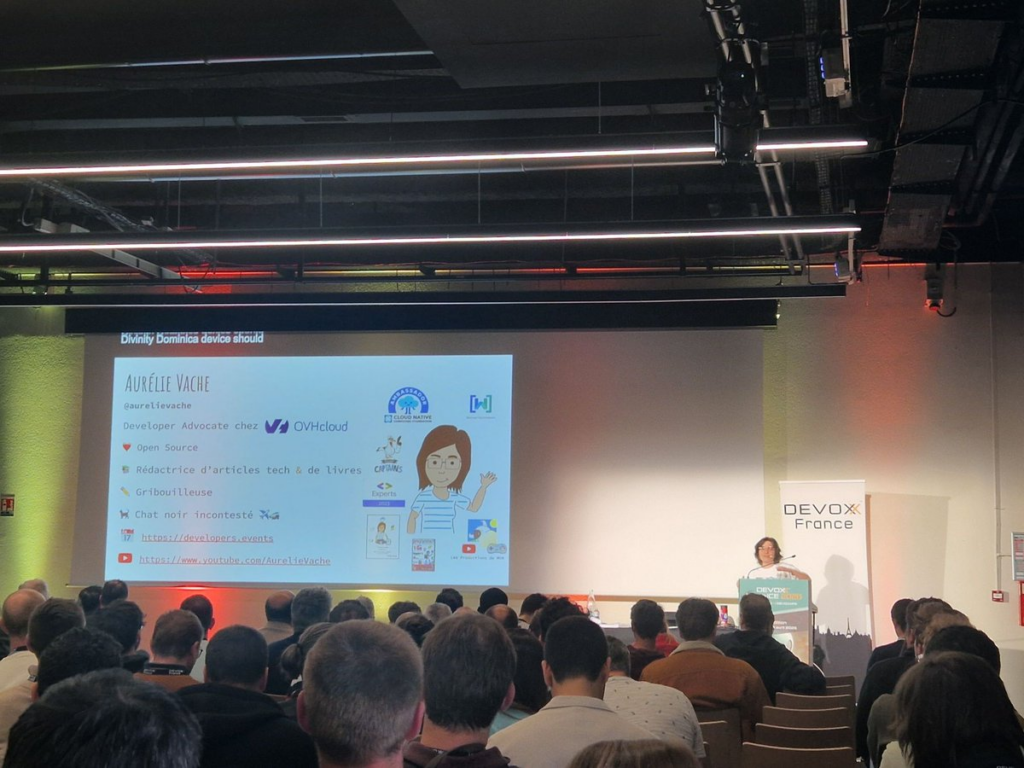
🎤 Speaker: Aurélie Vache
"Kubernetes est devenu le standard de facto pour déployer et exploiter des applications conteneurisées. Nous l'utilisons, ainsi que son ecosystème, au quotidien, mais le connaît-on si bien ?
Tout au long de ce talk, avec un mix de quiz et de démos en live, vous découvrirez (ou redécouvrirez) les concepts clés de Kubernetes (pods, secrets, services, namespaces...), les composants interne mais aussi les bonnes pratiques d'utilisation.
Un format original avec un quiz, du fun et des démos, qui conviendra aussi bien aux débutants qu’aux confirmés, afin d'apprendre, réviser et challenger vos connaissances du merveilleux monde de Kubernetes et de son écosystème, tout en s'amusant.
Soyez là ou le plus rapide pour tenter de gagner des cadeaux !"
🏴 Kubernetes has become the de facto standard for deploying and operating containerized applications. We use it, as well as its ecosystem, on a daily basis, but do we know them as well as we think we do?
With a mix of quiz and live demos, come learn and/or improve your knowledge. You will discover (or rediscover) the key concepts of Kubernetes (pods, secrets, services...), internal components but also best practices.
In this fun and dynamic talk, come compete throughout the quiz and explore the wonderful world of Kubernetes.
Icing on the cake: the first will win some swags.
🎥 Replay.
"QR Codes : suivez les points sans vous perdre !"
🏴 "QR codes: follow the dots without getting lost!"
🎤 Speaker: Benoît Masson & Sébastien Chedor (OnePoint)
"Les QR Codes, tout le monde connaît et les utilise régulièrement. Mais savez-vous vraiment comment ils fonctionnent, pourquoi c'est aussi rapide et fiable, même avec une caméra de faible qualité ou un code en partie caché ou détérioré ?
Nous vous proposons de coder ensemble un lecteur de QR Codes, avec un minimum d'outils :
* capture et analyse de la vidéo issue de la webcam pour détecter la position du code, à l'aide d'OpenCV
* extraction et décodage du contenu, avec correction d'erreur grâce à l'algorithme de Reed-Solomon.
À la fin de cette session, vous devriez être capables de décoder un QR Code à l'oeil nu 🕵️ (et un brouillon…)".
🏴 “Everyone knows QR codes and uses them regularly. But do you really know how they work, and why they are so fast and reliable, even with a low-quality camera or a partially hidden or damaged code?
We propose coding a QR code reader together, using a minimum number of tools:
* capturing and analysing webcam video to detect the position of the code, using OpenCV
* extracting and decoding the content, with error correction using the Reed-Solomon algorithm
By the end of this session, you should be able to decode a QR code with the naked eye 🕵️— and a rough sheet of paper…”
🎥 Replay.
"Noms de domaines : la grande histoire des petites extensions"
🏴 “Domain names: the big story behind small extensions”
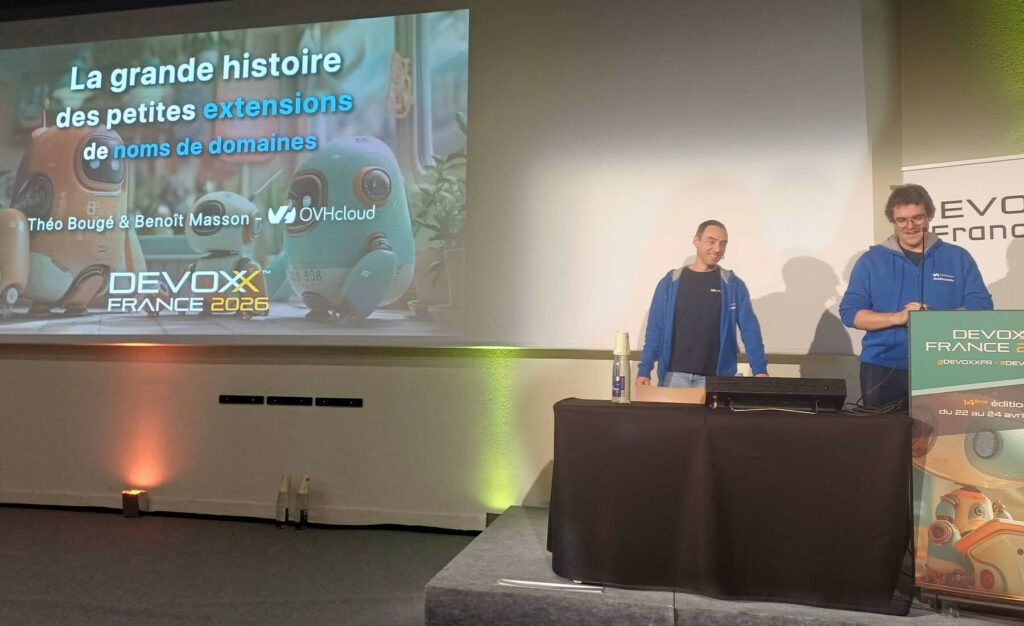
🎤 Speakers: Benoît Masson & Theo Bougé
"Derrière les quelques lettres qui suivent un point (.com, .fr, .ai…) se cache un univers riche de stratégies techniques, d’enjeux géopolitiques et de batailles commerciales.
À l’approche du nouveau round de l’ICANN prévu en 2026 qui va autoriser de nouvelles extensions, il est temps de revenir sur les fondations techniques du DNS, ainsi que sur les grands épisodes de cette aventure méconnue. Des TLD historiques aux extensions détournées, des dramas autour du .web aux ambitions du Web3, nous explorerons l’évolution d’un système devenu central dans les logiques de souveraineté numérique et d’innovation commerciale.
Une plongée dans les coulisses d’un Internet en perpétuelle transformation."
🏴 “Behind the few letters that follow a dot — .com, .fr, .ai and others — lies a rich world of technical strategies, geopolitical issues and commercial battles.
As the new ICANN round planned for 2026 approaches, which will authorise new extensions, it is time to revisit the technical foundations of DNS, as well as the major episodes in this little-known story. From historic TLDs to repurposed extensions, from the drama around .web to the ambitions of Web3, we will explore the evolution of a system that has become central to digital sovereignty and commercial innovation.
A deep dive behind the scenes of an Internet in constant transformation.”
🎥 Replay.
"Informatique quantique, ce coup-ci on vous dit tout !"
🏴 “Quantum computing: this time, we tell you everything!”
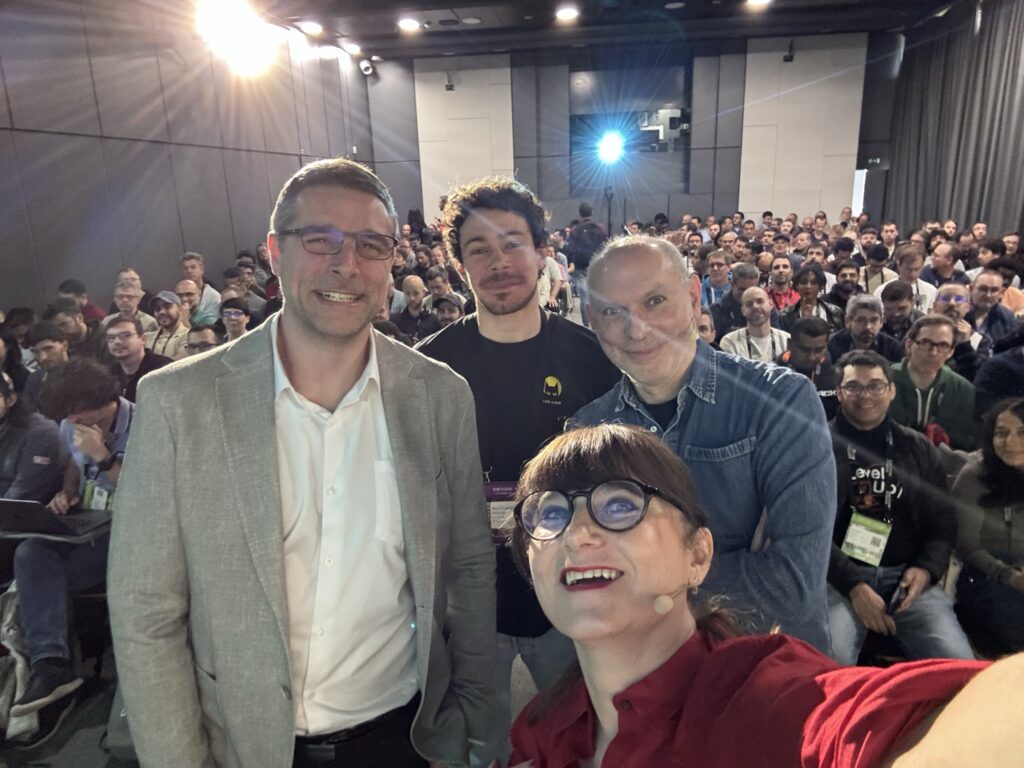
🎤 Speaker: Fanny Bouton, Olivier Ezrati (Quantum Energy Initiative) & Guillaume Schurck (Alice & Bob)
"Informatique quantique pour développeurs : comprendre, coder, passer à l’échelle
L’informatique quantique sort du laboratoire et devient progressivement accessible aux développeurs via des SDK open source, des notebooks, des simulateurs et des QPU disponibles dans le cloud. En 2026, la question n’est plus « qu’est-ce que le quantique ? » mais « comment un développeur peut-il s’en emparer concrètement ? »
Nous commencerons par poser les bases essentielles pour comprendre le modèle de calcul quantique : qubit, superposition, intrication, et ce que ces concepts impliquent pour un développeur.
Nous passerons ensuite au code : écrire et exécuter des circuits quantiques, utiliser des SDK modernes, travailler dans des notebooks, tester sur simulateur puis sur de vrais QPU. Vous verrez à quoi ressemble un workflow quantique aujourd’hui.
Enfin, nous aborderons les cas d’usage concrets, illustrés par le retour d’expérience d’un grand compte : ce qui fonctionne déjà, les limites actuelles, et comment les équipes tech expérimentent le quantique de manière réaliste et industrielle.
Une session technique pensée pour les développeurs qui veulent anticiper la prochaine évolution majeure du calcul."
🏴 “Quantum computing for developers: understand, code and scale up.
Quantum computing is moving out of the laboratory and becoming progressively accessible to developers through open source SDKs, notebooks, simulators and QPUs available in the cloud. In 2026, the question is no longer ‘What is quantum?’ but ‘How can developers make practical use of it?’
We will begin by laying out the essential foundations needed to understand the quantum computing model: qubits, superposition, entanglement, and what these concepts mean for developers.
We will then move on to code: writing and running quantum circuits, using modern SDKs, working in notebooks, testing on simulators and then on real QPUs. You will see what a quantum workflow looks like today.
Finally, we will address concrete use cases, illustrated by the experience of a large account: what already works, the current limitations, and how tech teams are experimenting with quantum computing in a realistic and industrial way.
A technical session designed for developers who want to anticipate the next major evolution in computing.”
🎥 Replay.
"Développer avec l'IA : et si c'était aussi simple qu'ajouter une librairie ?"
🏴 “Developing with AI: what if it were as simple as adding a library?”
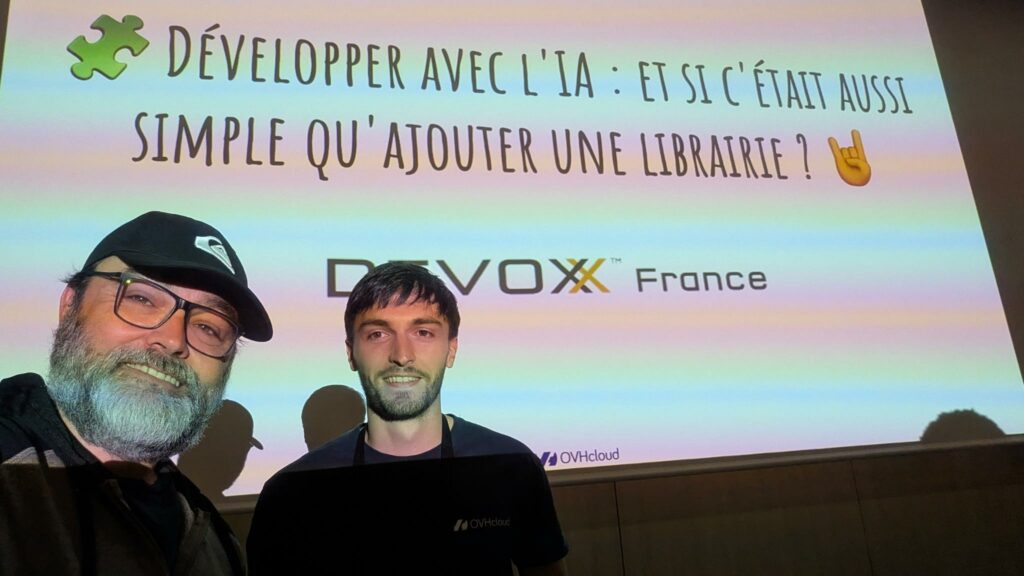
🎤 Speakers: Mathieu Busquet & Stéphane Philippart
"Intégrer de l'intelligence artificielle (IA) dans nos développements peut nous paraître plus complexe que de les utiliser dans notre quotidien.
Dois-je apprendre un nouveau langage ou une nouvelle stack ?
Durant ce workshop nous vous proposons de vous donner tous les éléments pour intégrer l'IA sans quitter votre langage de prédilection : Java 😍. Ce sera l'occasion de découvrir les Frameworks du moments : LangChain4j, Quarkus, …
Nous vous invitons à découvrir toutes les facettes d'un chatbot avec l'IA générative (customiser un prompt, rajouter vos données (RAG), appeler des outils locaux ou distants (MCP) et créer des agents) mais aussi parce que l’IA ne se limite pas aux chatbots : faire de la transcription, créer de l'audio ou même faire un traducteur.
Et, toujours pour vous simplifier la vie, venez juste avec votre ordinateur et un navigateur Internet, on se charge du reste pour vous construire un environnement de développement aux petits oignons grâce aux CDE.
À la suite de ce talk vous repartirez avec une boîte à outils vous permettant d'intégrer simplement la puissance des modèles d'IA au sein de vos développements de tous les jours."
🏴 “Integrating artificial intelligence into our developments can seem more complex than using it in our daily lives.
Do I need to learn a new language or a new stack?
During this workshop, we will give you all the tools you need to integrate AI without leaving your favourite language: Java 😍. It will be an opportunity to discover some of today’s key frameworks, including LangChain4j and Quarkus.
We invite you to explore all the facets of a chatbot with generative AI — customising a prompt, adding your own data with RAG, calling local or remote tools with MCP, and creating agents — but also to see that AI is not limited to chatbots: it can also be used for transcription, audio creation and even translation.
And to make your life even easier, just bring your computer and an internet browser. We will take care of the rest, building a polished development environment for you thanks to CDEs.
After this talk, you will leave with a toolkit that will allow you to integrate the power of AI models into your everyday development work.”
"Détectives de la prod : résoudre l’enquête avant le crash"
🏴 “Production detectives: solve the case before the crash”
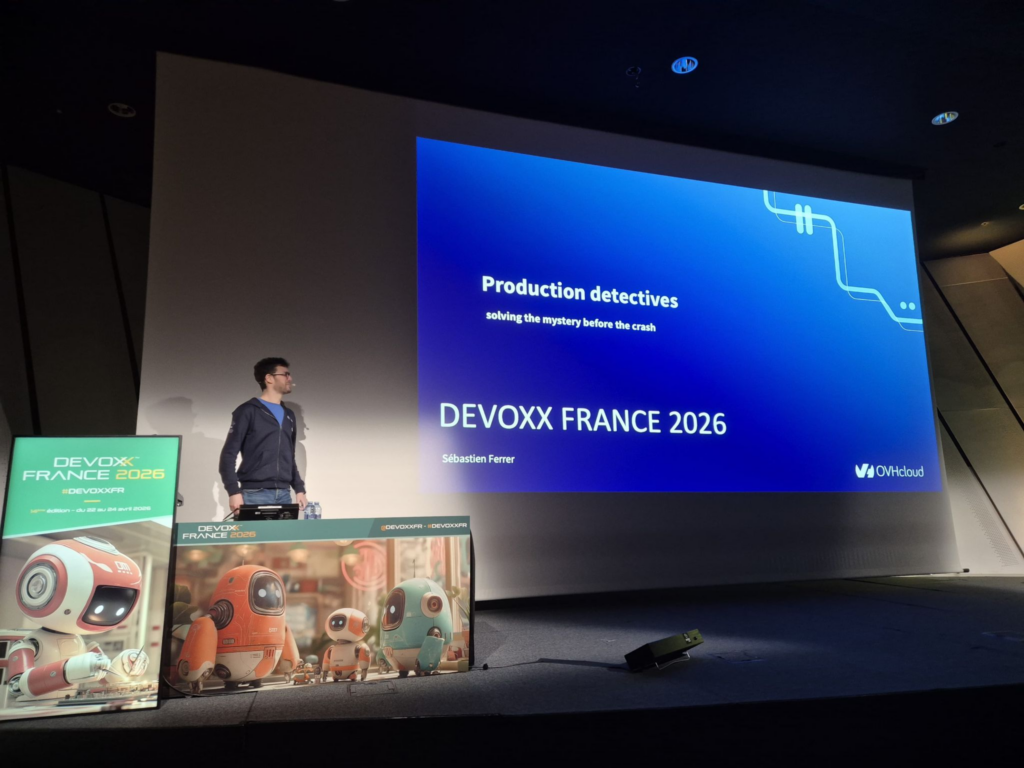
🎤 Speaker: Sébastien Ferrer
"Saviez-vous que, derrière les coulisses de vos outils de travail, se cachent des équipes prêtes à intervenir à tout moment ?
Ces équipes, souvent discrètes mais essentielles, gèrent des dizaines de projets avec des effectifs réduits. Mais quand une alerte survient, elles doivent réagir vite. Très vite. Comment réussir à diagnostiquer et résoudre un incident en pleine production, sans perdre une précieuse seconde ?
Dans ce talk je vous emmène au cœur de l’action, où je partage notre méthodologie pour transformer chaque crise en une enquête méthodique et efficace. Nous explorerons comment des outils bien pensés, une organisation affûtée, et un soupçon d’intuition transforment la gestion d’incidents en une véritable enquête… parfois aussi palpitante qu’une partie de Cluedo.
Au programme : bonnes pratiques de troubleshooting, logging et monitoring, pour que vous repartiez avec des clés concrètes pour dompter les incidents dans vos propres projets.
Vous verrez qu’en production, chaque problème cache une histoire… à résoudre en équipe !"
🏴 “Did you know that behind the scenes of your work tools, there are teams ready to intervene at any moment?
These teams, often discreet but essential, manage dozens of projects with limited staff. But when an alert occurs, they need to react quickly. Very quickly. How can they diagnose and resolve a production incident without losing precious seconds?
In this talk, I will take you into the heart of the action, where I share our methodology for turning every crisis into a structured and efficient investigation. We will explore how well-designed tools, a well-honed organisation and a touch of intuition can transform incident management into a real investigation — sometimes as thrilling as a game of Cluedo.
On the agenda: troubleshooting best practices, logging and monitoring, so you leave with concrete keys to taming incidents in your own projects.
You will see that in production, every problem hides a story… one to solve as a team!”
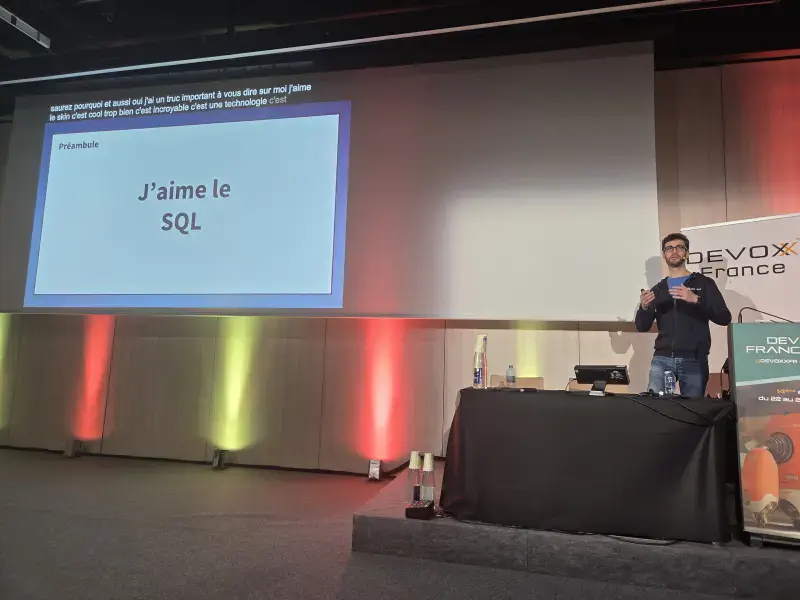
🎤 Speaker: Sébastien Ferrer
"On nous l’a répété maintes fois : “écrire du SQL dans du code source, c’est dépassé”.
Les ORMs sont partout. Ils ont facilité notre quotidien en nous permettant de manipuler nos bases de données sans nous soucier du SQL. Mais parfois, on aimerait un peu plus de contrôle, un peu plus de performance… sans pour autant revenir aux longues heures de mapping manuel et de requêtes préparées à la main.
SQLC offre une autre approche. Initialement conçu pour du Go, langage dans lequel cette technologie sera présentée dans ce talk, il permet d’écrire des requêtes SQL tout en générant du code type-safe et performant, sans ajouter de lourdeur ni de dépendances. Pas question ici de rejeter les ORMs, mais plutôt d’explorer un nouvel outil qui vient enrichir notre palette de solutions.
Dans ce talk, nous verrons comment SQLC fonctionne, dans quels cas il brille, et comment il s’intègre parfaitement dans un stack moderne. Vous aimez le SQL ? Vous voulez juste un peu plus de maîtrise sur vos requêtes ? Venez, vous risquez d’être agréablement surpris."
🏴 “We have been told many times: ‘Writing SQL in source code is outdated.’
ORMs are everywhere. They have made our daily lives easier by allowing us to manipulate databases without worrying about SQL. But sometimes, we would like a little more control, a little more performance — without going back to long hours of manual mapping and hand-written prepared queries.
SQLC offers another approach. Initially designed for Go, the language in which this technology will be presented during the talk, it allows you to write SQL queries while generating type-safe and high-performance code, without adding heaviness or dependencies. The goal here is not to reject ORMs, but rather to explore a new tool that enriches our range of solutions.
In this talk, we will see how SQLC works, where it shines, and how it integrates perfectly into a modern stack. Do you like SQL? Do you simply want more control over your queries? Come along — you may be pleasantly surprised.”
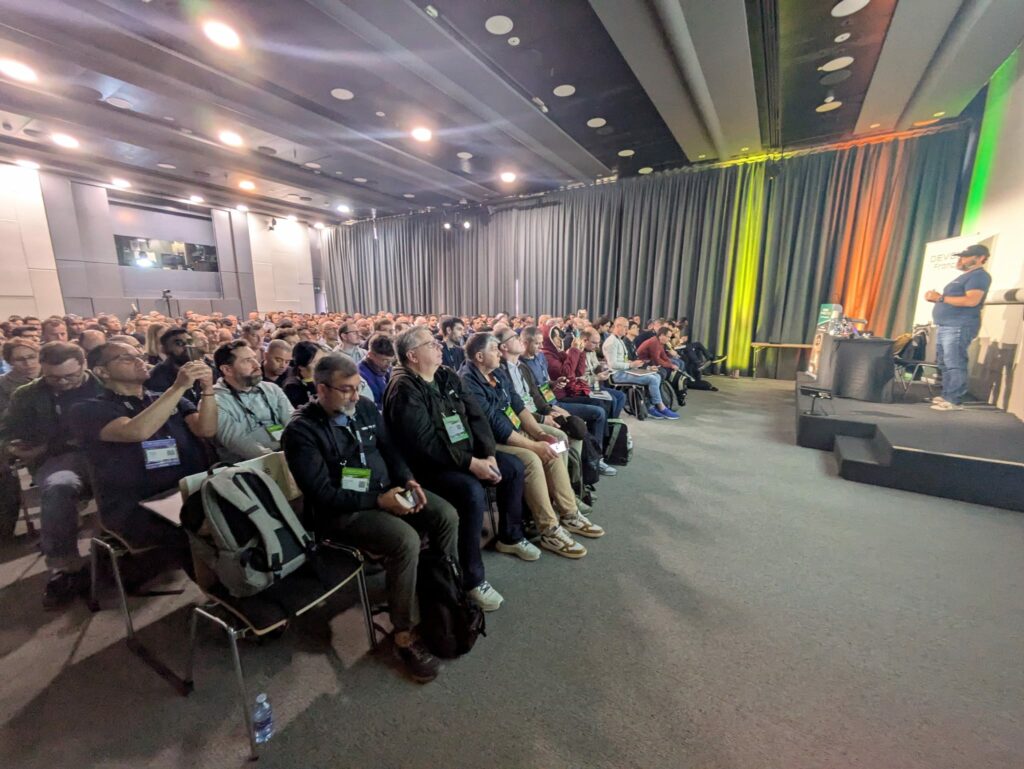
🎤 Speaker: Stéphane Philippart
"RAG, MCP, tooling, function calling, agents, fine tuning, training, …
Que de termes barbares mais qui ont tous le même objectif : faire en sorte que le modèle d'intelligence artificielle que vous utilisez réponde correctement à vos questions et attentes 😅.
Et pour ça il va falloir ajouter de la connaissance, des données (privée ou publiques, …).
Durant ce talk je vous propose d'y voir un peu plus clair dans cette jungle des acronymes puis, fort de connaître les différences, vous proposer comment l'implémenter en tant que développeuses et développeurs.
Chaque approche a ses spécificités, ses avantages et ses inconvénients.
A la fin de ce talk, non seulement vous saurez choisir la bonne approche, mais aussi ajouter dans vos développements quotidiens la dose d'IA utile."
🏴 “RAG, MCP, tooling, function calling, agents, fine tuning, training…
So many intimidating terms, but they all have the same goal: ensuring that the artificial intelligence model you use responds correctly to your questions and expectations 😅.
And to do that, you need to add knowledge and data — private, public or otherwise.
During this talk, I will help you see more clearly through this jungle of acronyms, and once you understand the differences, I will show you how to implement them as developers.
Each approach has its own specificities, advantages and disadvantages.
By the end of this talk, you will not only know how to choose the right approach, but also how to add the right dose of useful AI into your daily development work.”
🎥 Replay.
"Refactorer sans tout casser: anatomie des patterns de modernisation incrémentale"
🏴 “Refactoring without breaking everything: anatomy of incremental modernisation patterns”
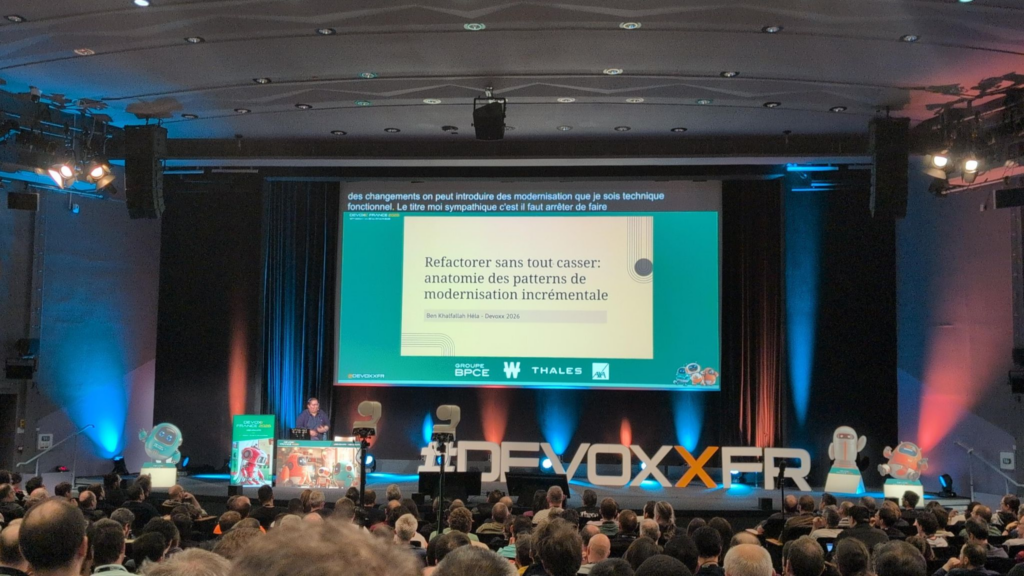
🎤 Speaker: Héla Ben Khalfallah
"Cette session répond à un problème extrêmement courant mais rarement traité de façon structurée : comment moderniser un système legacy sans big bang, sans freeze de la prod, et sans multiplier les régressions. Plutôt que de parler “microservices” ou “rewrite from scratch” de manière abstraite, la session propose un playbook de modernisation incrémentale, articulé autour de patterns éprouvés : Strangler Fig, Parallel Change (Expand/Contract), Branch by Abstraction, décomposition par capacités métier / sous-domaines / transactions, et les patterns de conception (Facade, Adapter, Proxy, Mediator) utilisés comme briques concrètes de migration.
Le contenu est ancré dans la pratique : il synthétise à la fois des retours d’expérience industriels (Netflix, Khan Academy, etc.) et des travaux de recherche / rédaction. L’objectif n’est pas de présenter un catalogue de patterns, mais de montrer comment les combiner pour construire une trajectoire de migration observable, réversible et livrable en continu.
Vous repartirez avec une grille de lecture concrète pour garder des migrations observables, réversibles et compatibles avec le rythme produit."
🏴 “This session addresses an extremely common problem that is rarely handled in a structured way: how to modernise a legacy system without a big bang, without a production freeze, and without multiplying regressions. Rather than talking abstractly about microservices or rewriting from scratch, the session offers an incremental modernisation playbook built around proven patterns: Strangler Fig, Parallel Change — Expand/Contract — Branch by Abstraction, decomposition by business capabilities, subdomains and transactions, as well as design patterns such as Facade, Adapter, Proxy and Mediator used as concrete building blocks for migration.
The content is rooted in practice: it brings together both industrial feedback from companies such as Netflix and Khan Academy, and research and written work. The goal is not to present a catalogue of patterns, but to show how they can be combined to build a migration path that is observable, reversible and continuously deliverable.
You will leave with a concrete framework for keeping migrations observable, reversible and compatible with the pace of product development.”
🎥 Replay.
📺 Devoxx France published the 232 videos (keynotes, conferences, tools in action, lunch talks & deep dives) on the Devoxx France YouTube channel.
Podcast
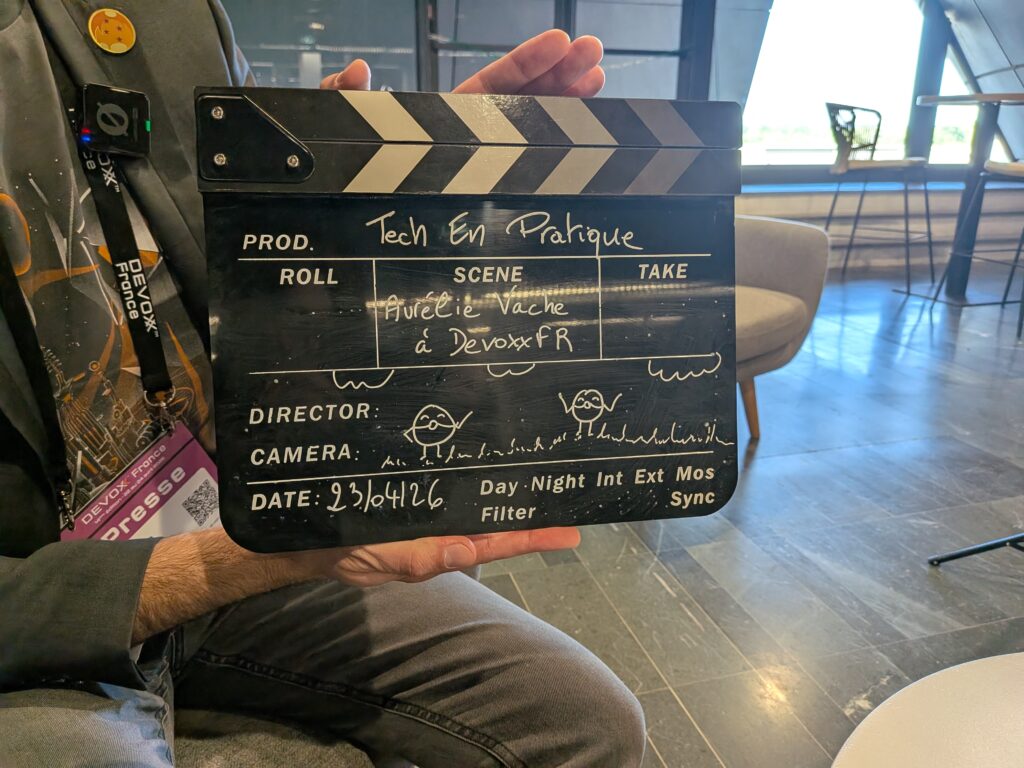
Devoxx France was also an opportunity for OVHcloud’s Aurélie Vache, Stéphane Philippart, and Magali De Labareyre to be interviewed in the Press space for the “Tech en Pratique” podcast.
The episodes will be available on YouTube starting in September! 🙂
Key Trends
- AI moved from hype to production
The focus shifted toward agentic systems, RAG, observability, governance, and enterprise integration, with more emphasis on shipping useful AI than experimenting.
- Java evolved for modern AI and cloud workloads
LangChain4j, GraalVM, native image, and JDK modernization reinforced Java’s role as a serious platform for AI-enabled enterprise systems.
- Platform engineering became a core priority
CI/CD maturity, OpenRewrite, modernization, and developer productivity all reflected one goal: faster delivery without losing control.
- Security moved deeper into developer workflows
Shift-left security, AppSec, authorization, Software Supply Chain Security and secure-by-design approaches gained importance, especially with AI-generated code increasing governance needs.
- Cloud & architecture focused on operational resilience
Kubernetes, containers, observability, and scalable systems remained central, with a stronger focus on practical engineering over hype.
- Front-end discussions matured
Accessibility, performance, reactivity, and maintainability took priority over framework wars.
- Open source and European digital sovereignty gained traction
Open models, self-hosted tooling, privacy, and vendor independence became increasingly important themes.
- Developer experience (DX) became strategic
Tooling, automation, terminal workflows, and reducing cognitive load were seen as key drivers of productivity and competitiveness.
Conclusion
This Devoxx France edition was a raging success for the speakers, sponsors, and attendees alike ♥️.
💬 Stay in Touch
Want to chat with us, share your thoughts, or just say hi? Here’s how to get in touch with us:
- 🟣 Discord: OVHcloud Discord server
- 🐦 X / Twitter: @OVHcloud
- 💼 LinkedIn: OVHcloud LinkedIn
- 🐙 GitHub: github.com/ovh