
I am often asked: will OVHcloud support one of the AI Gigafactory projects, and participate in one of the consortia being formed in France?
The only way we could participate in the AI Gigafactory project would be to form a new consortium, with major GPU users such as OVHcloud, OVHai, Shadow, Qwant, Gladia, Dragon LLM, and other startups and companies from our ecosystem.
Our AI trajectory is part of the Step Ahead strategy plan that I introduced to our clients at the Summit 2025, and of which I have been implementing since returning to the head of OVHcloud 11 months ago. We continue to execute this strategy with an artificial intelligence component, founding it upon 5 layers:
- the GPU in our datacenters;
- GPU orchestration;
- the Tokens aaS;
- the AI PaaS;
- the AI SaaS.
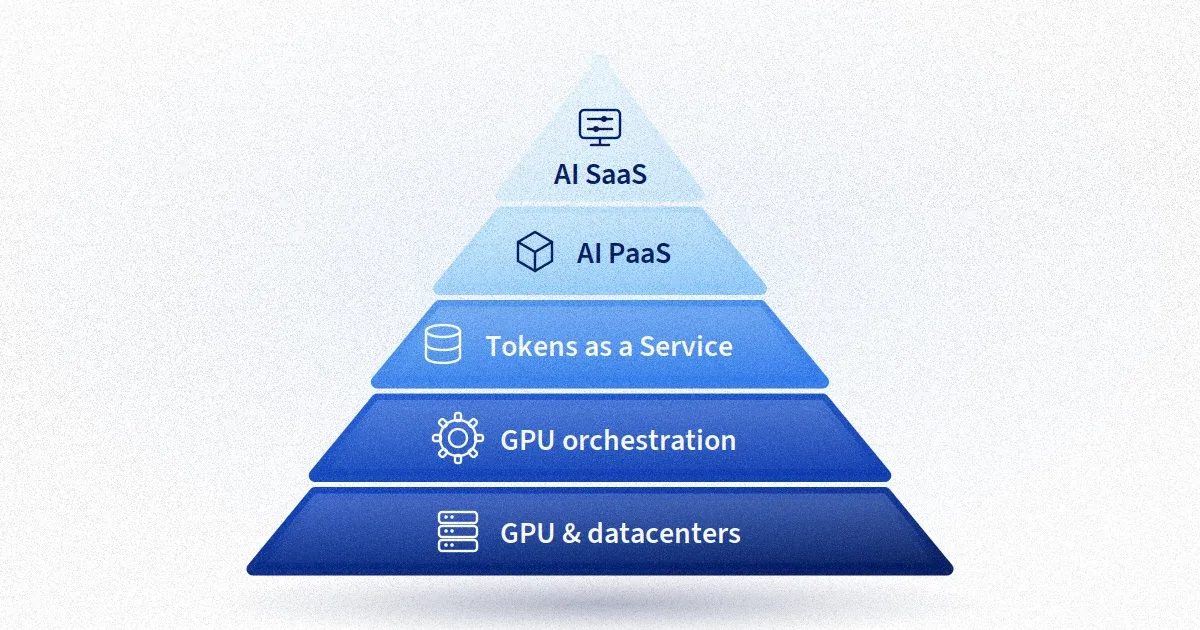
Today, we have 250 MW available in our datacenters, immediately usable to deploy GPUs. This is everything we’d need to start and scale up quickly, in order to execute the plan. We have already developed systems, of which we are currently operating, that allow us to control these GPU layers — both for training and inference. Per the Tokens aaS, we continue to enrich the catalog by basing it on open source models and with the help of Dragon LLM and Gladia. And we have started training our own models to be able to offer the widest, richest range in Europe.
AI has swept through the software development process. We need new tools to develop in a different way, and to create new products. We are already building the blocks to be able to offer our clients this new generation of AI PaaS. And lastly, with the OVHai Workspace that we introduced at VivaTech 2026, we are able offer a new approach to productivity, to having a digital presence, and to enterprise application development — one in which artificial intelligence is the primary means of interaction.
In so many ways, the AI Gigafactory offers of EuroHPC are in fact compatible with our Step Ahead strategy. The requested GPU volumes, the expected revenue, technical stacks, and services offered are all within our strategic trajectory until 2030. So the question we are asking ourselves is more so: can the AI Gigafactory help us to go faster, further, and have more means to succeed than what we already have?
Three elements are not aligned with our strategy.
The purely national logic
We are a European enterprise, with a presence in France, Ireland, Spain, Portugal, Italy, Germany, Poland, and the United Kingdom; and we operate datacenters in several of these countries. We therefore do not think with a national scope, but with a European one, because this can be the only scale where you can find a critical mass of clients that will use AI.

Every national strategy is doomed for failure: there simply aren't enough customers to make investments of such a size profitable. In our opinion, national demand is simply too low, so we must operate on a European scale.
A technical architecture from the 2000s
This plan requires that everything takes place at a single location, from a single address, with one electrical connection, and in one building. Technically speaking, this design is no longer realistic. Today, we distribute the risks and constraints across several locations, to gain redundancy and high availability, and to reduce all types of risk.
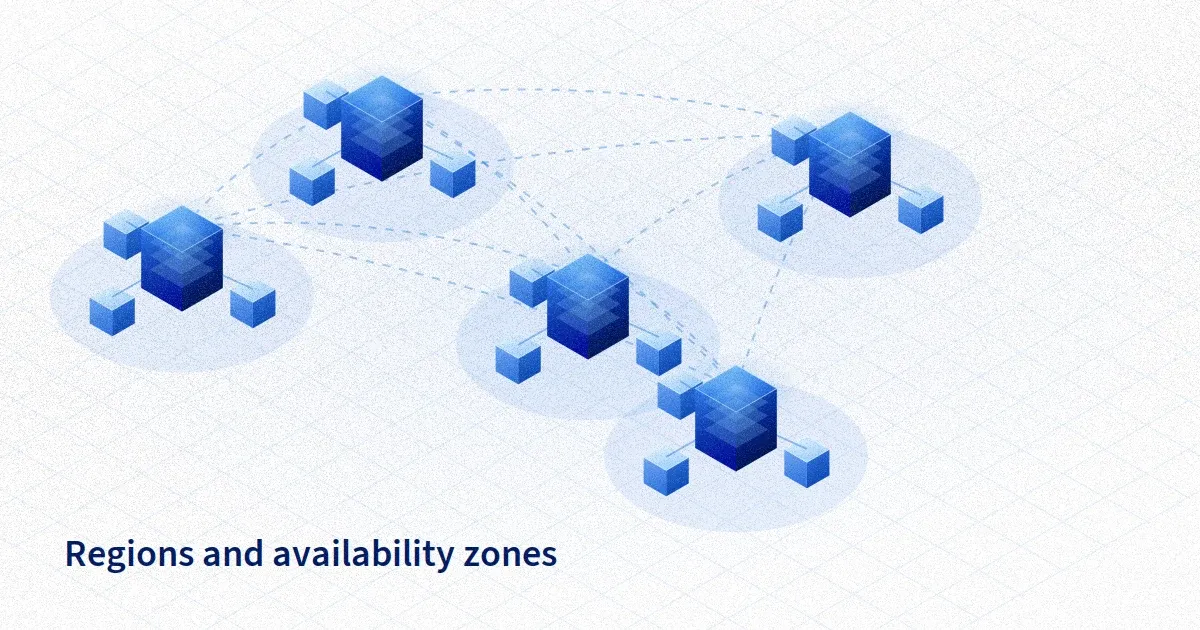
Even if in pre-training, all GPUs must be in the same location, but these same constraints do not apply in post-training or inference. On the contrary, in the case of inference, it is preferable to have several independent autonomous infrastructures. For us, this design point is therefore a true mismatch per the reality of what our needs are.
Furthermore, the social and environmental acceptability of giant datacenter plans in Europe must of course be taken into account. There are real risks to executing a giant new plan, with deadlines imposed and penalties incurred in case of delay.
A symbolic public order
The announcement mentioned 30% of the CAPEX. This figure remains true, but as they say, the devil is in the details.
The French state and the European Union are committed to buying 200 million euros of AI over five years. And these 200 million must represent a maximum of 30% of the CAPEX that the AI Gigafactory must invest. In other words, the AI Gigafactory must invest at least 600 million euros solely in GPUs.
The 200 million are paid out as income, over five years, or 40 million per year. If these revenues represented 30% of the total revenue, it would mean that the AI Gigafactory would generate 120 million in revenue per year. These revenues must be set against the 600 million in investment that is solely for GPUs, to which you must add the datacenter CAPEX, the network, the software, and then all OPEX including teams and energy.
It goes without saying that these figures don't add up. It is estimated that it is necessary to generate between 300 and 400 million per year to make a 0% margin, especially because the rapid obsolescence of GPUs must be taken into account as well.
And so the 40 million per year does not represent 30% of the amounts at stake, but only between 10% and 15%. The 85% to 90% of remaining capacity are for sale to other clients, knowing that the offer is not very attractive: only one location for all GPUs, and this location only in France.
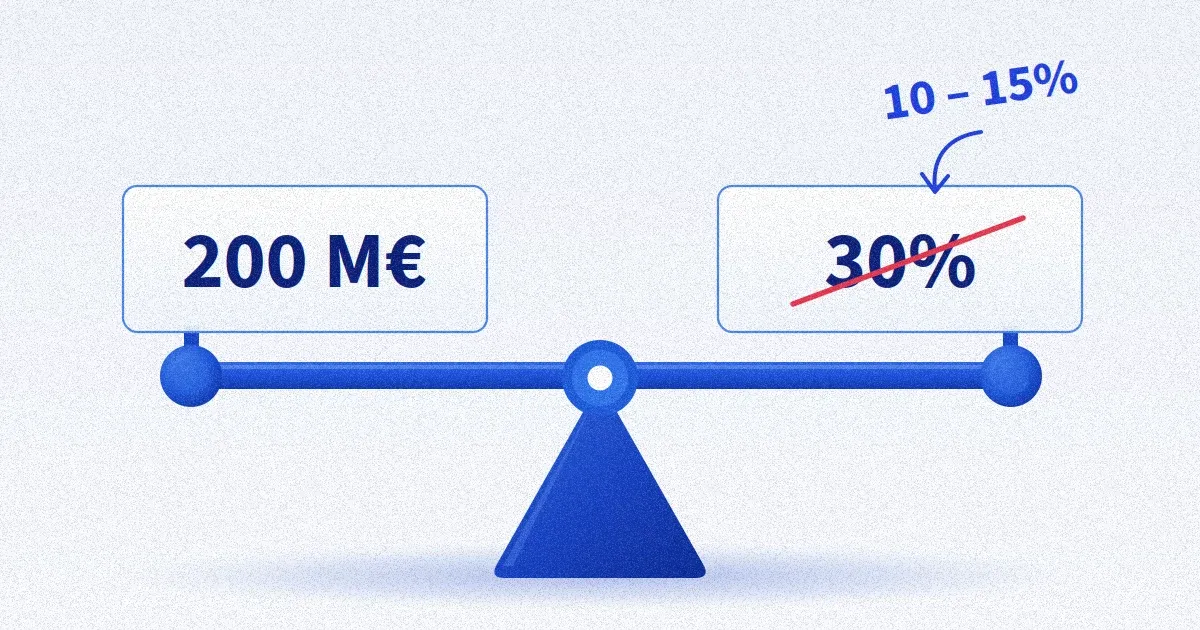
Everyone knows that the state does not have to finance everything. It is up to the companies to invest, to go find the customers, to bear the risk. That's not the subject at hand. The subject is that four constraints must be added, one of which is transversal. A national plan. A unique location. A client who accounts for only 10% to 15% of the revenue. And the rapid obsolescence of GPUs.
It is precisely on this node that we are working today: is it possible to make these four constraints of the AI Gigafactory project compatible with our Step Ahead strategy? It is up to us to work to find the right equation that balances ambition, usage, customers, architecture, and a business model, and then to decide if the AI Gigafactory could act as an accelerant for us. That is why we welcome this political initiative and Europe’s ambition to accelerate on AI.
Whatever the case, Europe needs sovereign AI, and we will be there to provide it with the 5 layers of AI we have been developing — no matter what ends up being our final decision about the AI Gigafactory.