
Why network trust is critical for all organizations
Network outages are a constant source of concern for businesses. Unscheduled downtime can lead to financial losses and can therefore be very expensive. According to Gartner, their average total cost per minute s3 is about $5,600.
For all types of businesses, network resilience is becoming increasingly important for critical operations, as well as for the growing use of cloud services. Data availability is essential for everyone, from enterprise IT departments in the cloud to websites providing public services, to healthcare organizations performing extended reality (XR) surgical operations.
Due to this growing dependence on network performance, we have developed a five-year plan aimed at establishing a hyper-resilient network and reducing the risk of threats capable of paralyzing commercial operations. Given that these failures come from all angles, including human error, weather conditions and fiber cuts, as well as vulnerability to bugs and cyberattacks, we believe that 'hyper-resiliency is the path that all network providers must follow. '
The implementation of our plan began three years ago. We have been working tirelessly to completely reorganize every part of our network, from the optical and IP layers to the paths leading to our global data centers. The goal is to increase confidence in our network performance by increasing its reach and speed.
Continuous improvement for 'hyper-resilience
Our journey towards hyper-resiliency is based on a five-pillar approach aimed at improving the performance of all aspects of the network, including event management, incident management, change management, and problem management. These pillars support the upper layer, which changes how customers use network services, and the lower layer, which allows us to automatically configure each of the components used by our customers.
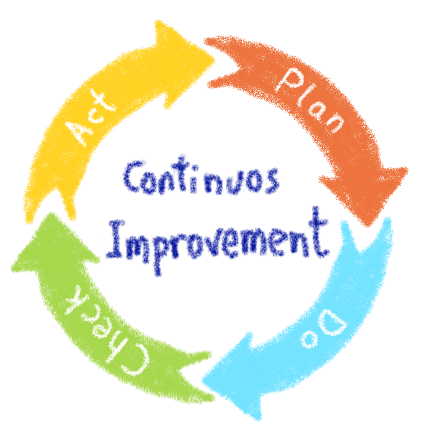
All of this is underpinned by a philosophy of continuous improvement that allows us to accurately assess the number of risks introduced and find effective ways to manage them.
Reducing risks means not introducing problems, which often happens when human intervention is involved. To facilitate centralised network management and make it more flexible, we have introduced a software-defined network approach. This enables better control and the use of automation in both physical and virtual network environments.
To reinforce this approach, multiple fibre optic connection paths are planned in our data centres to further reduce the risk of service interruption. When cables were intentionally sabotaged at the beginning of the year, several French cities experienced internet slowdowns and outages. As our network has several routes for data traffic, we were able to reroute it, and our customers therefore did not notice.
A proactive and predictive approach to risk management
Our risk management methodology is both proactive and predictive. It is designed to grow and evolve: nothing is ever static in network evolution. Regarding problem management, we can now solve any problem proactively using a data-driven approach. They show us the recurring patterns that indicate possible points of failure. This allows us to resolve the issue immediately rather than let it fester. We have also increased the filtering on the network to reduce the risk of malicious activities. These preventive measures reduce the risk of a larger incident later on, and we can ensure that the impact on the customer is as minimal as possible.

One of our primary goals is to achieve a 100% level of automation to eliminate not only human error, but also to ensure that any failure can be detected and corrected as soon as it occurs. With the software we created to manage the network, we introduced automation into the production of code. This significantly reduces errors and with robust CI/CD processes we can eliminate bugs and errors before they go to production.
Non-intrusive provisioning is another way to reduce and eliminate risk. Our next-generation network can discover new devices and determine their role in the network, then automatically configure, install, and deploy them. This level of automation also eliminates the headache of updating device firmware. Previously, it was a long and disruptive process. Now we can update them more easily, without any network disruption. We are going even further in this area with software designed to s'self-repair in order to detect, react to, and correct problems on the fly.
Leveraging new services for customers
With the implementation of a highly resilient network, we can now focus on providing better customer service and helping them meet their specific needs. It also means we can offer more value-added services that customers can use in the cloud, such as private networks, and support any enterprise looking to operate infrastructure as code (IaS). This allows us to deliver services much faster and easier, and we can also ensure that they are resilient by default.
While threats can never be completely eliminated, we strive to make our own network as resilient as possible and consider this a continuous process. Ultimately, it's about ensuring customers can rely on their networks, drive value, and increase their agility. Since they are no longer just a commodity but a valuable business tool, it is essential that hyper-resilient networks become the norm for everyone.