

You never see it, but without the DNS, no website would be accessible, no email could be delivered, and no online service would work correctly.
At the heart of this system are DNS records, which structure how services are exposed on the Internet. These records evolve alongside modern web architectures, and at OVHcloud, this has resulted in support for SVCB and HTTPS records.
To better understand these innovations, let’s look at the main types of DNS records and their roles.
The DNS in a few words
The Domain Name System (DNS) translates a domain name into an IP address that is understandable by machines. When a user enters a web address (such as “www.example.com”), a request is sent to identify the corresponding server.
This phase, known as DNS resolution, uses different types of records that each fulfil a specific role.
The most common DNS records
Some records are essential when configuring a domain. Here are the main types present in a DNS zone.
A and AAAA: make a website accessible
For a website to be reachable, its domain name must be associated with an IP address. This is where A (IPv4) and AAAA (IPv6) records come in.
They form the basis of DNS resolution and allow browsers to reach the server hosting the site.
CNAME: creates an alias between two domain names
A CNAME record allows one domain name to point to another, without directly associating it with an IP address. For example, “blog.example.com” can link to “example.com”, which avoids duplicating the configuration.
⚠️ Note: a CNAME cannot be configured at the root of a domain (e.g. “example.com”). It is only used on subdomains, such as “blog.example.com”.
MX: manages the receipt of emails
MX (Mail Exchange) records indicate which servers should handle emails being sent to a domain. They play a central role in distributing messages and in the reliability of messaging.
TXT: verifies a domain and enhances security
TXT records allow additional information to be linked to a domain. They are particularly used to prove ownership to external services and to secure emails.
Mechanisms such as SPF, DKIM, or DMARC rely on TXT records to limit identity theft and spam.
SVCB and HTTPS: what are these new DNS records for?
During DNS resolution, the browser obtains the information needed to contact a server.
SVCB (Service Binding) and HTTPS records enrich this step by indicating more precisely how to access the service.
They may mention the supported protocols (HTTP/2 or HTTP/3), the preferred server, or certain technical parameters intended to optimise the connection.
By transmitting this information during the resolution, they limit certain intermediate exchanges between the browser and the server. This mechanism helps to improve the performance and loading speed of websites.
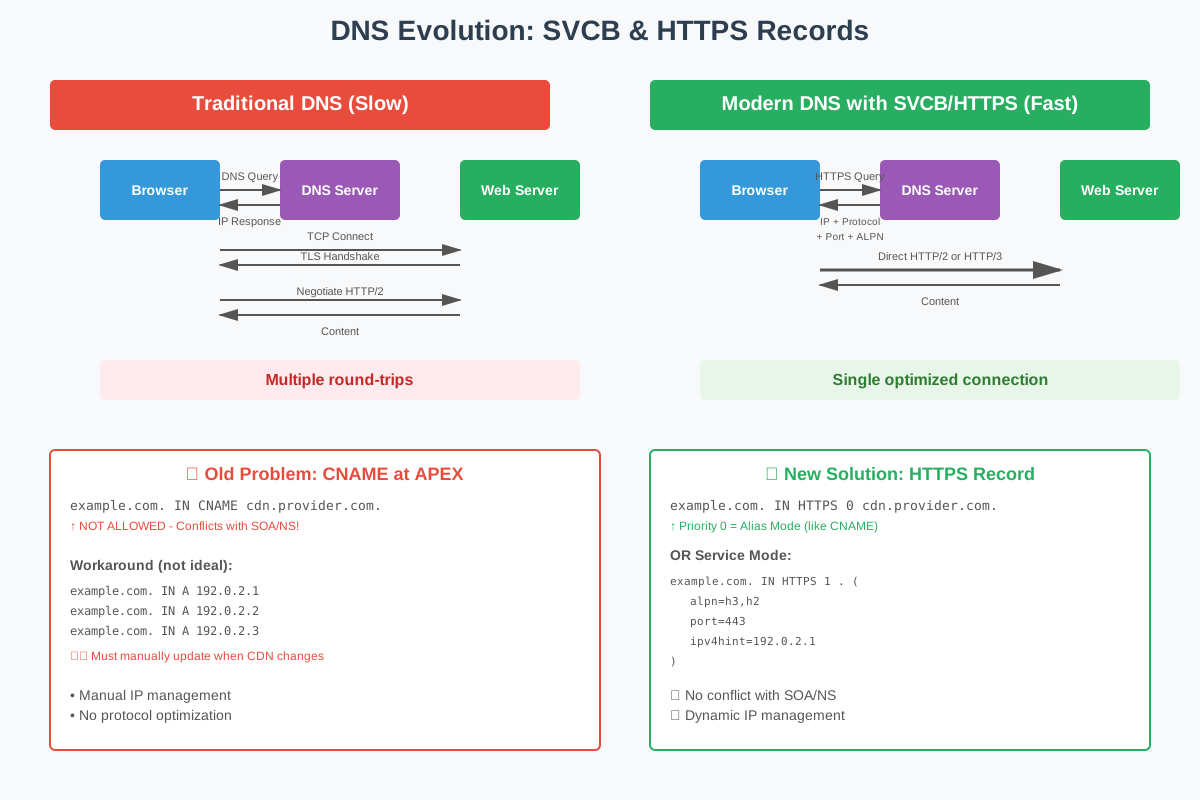
A key use case: the alias at the root of the domain
As mentioned, a CNAME record cannot be configured at the root of a domain (such as “example.com”). This constraint of the DNS required the use of alternative solutions when it was necessary to point a main domain to an external service.
HTTPS and SVCB records remove this limitation. They offer the option to indicate that a web service located at the root of the domain is provided by another name, similar to a CNAME, while adhering to DNS rules.
Here’s an example: a company broadcasts its site via a CDN accessible at the address “example.cdn-provider.net”, while retaining “example.com” as the access point. Thanks to a HTTPS record, the browser can be directed to the CDN service without a visible redirection for the user or a complex DNS configuration.
⚠️ However, these mechanisms rely on newer features, so their support may vary depending on the browsers and operating systems, particularly in older environments.
What benefits do these new records offer?
By enriching the DNS resolution phase, SVCB and HTTPS records can direct clients more accurately towards suitable services.
This helps to reduce latency, improve perceived performance, and strengthen consistency across browsers, protocols, and infrastructures.
These records also provide greater flexibility in DNS configuration, particularly for environments integrating CDNs, external platforms, or distributed cloud architectures.
How can I configure my SVCB and HTTPS records with OVHcloud?
SVCB and HTTPS records are available from your OVHcloud control panel.
To configure them:
- Go to the “Domain Names” section
- Select the relevant domain
- Access the “DNS Zone” tab
- Add a new SVCB or HTTPS record
Depending on your situation, you may need to adjust the associated settings (priority, target, service-specific options). For detailed information on managing DNS records, please consult our dedicated guide.
In summary: a more flexible and effective DNS
The DNS remains an essential pillar of the internet and continues to evolve to adapt to newer architectures.
With SVCB and HTTPS records, it is now possible to optimise service exposure, simplify certain configurations (particularly at the root of the domain), and improve performance from the resolution stage.This is a discreet yet strategic technical development in response to the growing demands for speed, security, and flexibility.

Bérénice Despres
Product Marketing Manager

Content Manager