
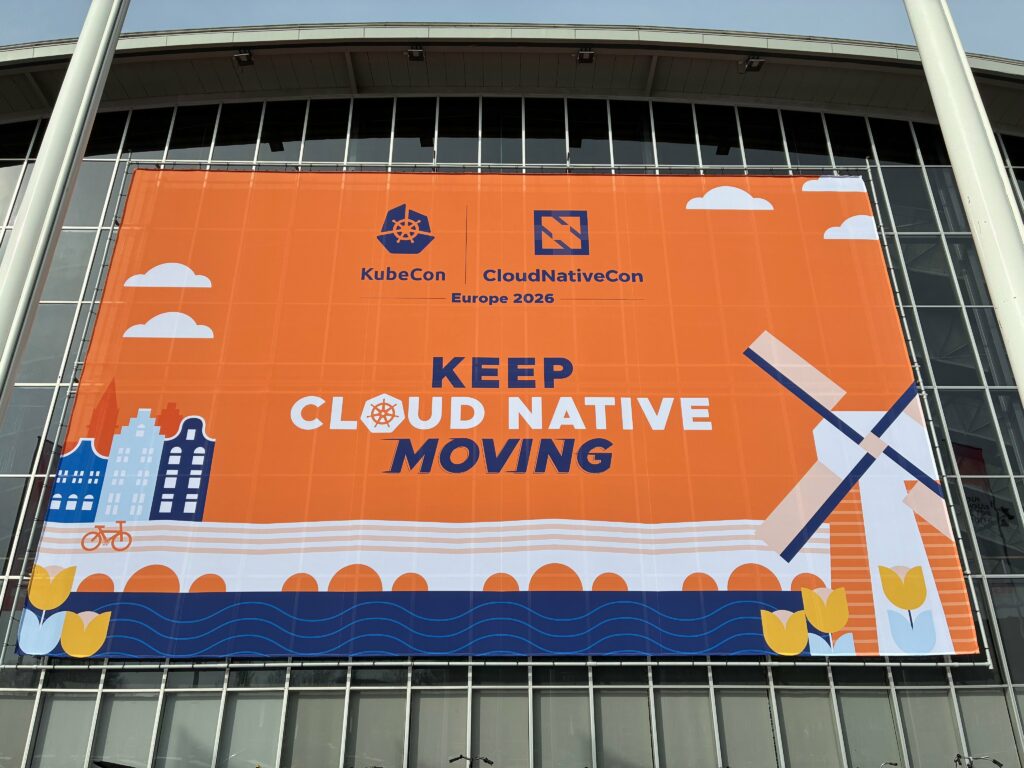
From March 23 to 26, 2026, the KubeCon + CloudNativeCon Europe took place in Amsterdam.
Aurélie Vache and Rémy Vandepoel attended alongside 26 other OVHcloud employees. In this blog, they share their thoughts about this second KubeCon set in the land of tulips.
KubeCon Europe 2026: the maturity milestone
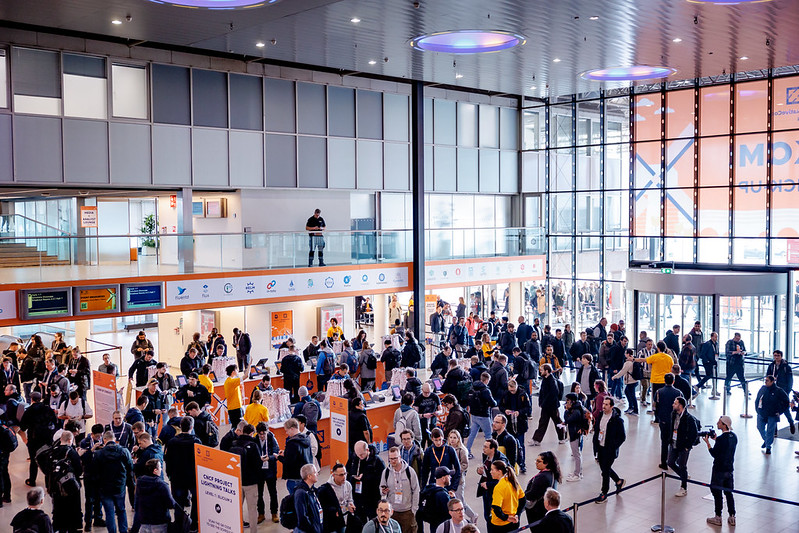
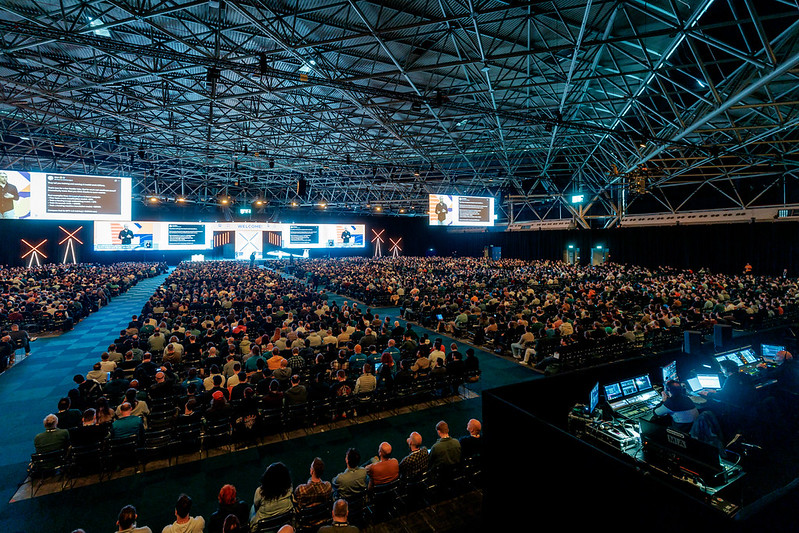
Back from Amsterdam, the buzz of the RAI halls still echoes in our ears. This 2026 edition of KubeCon + CloudNativeCon Europe wasn’t just another Kubernetes conference. It marked a turning point for this event: the point of maturity. And this is evident just by looking at the numbers: 13,500 attendees for this edition! The largest attendance ever recorded!
While previous years were about exploration and expansion, 2026 was the year of massive industrialization, with one non-negotiable pre-requirement: digital sovereignty.
Key figures from the 2026 edition:
- 13,500+ attendees (46% first-time attendees)
- 100 countries represented
- 3,474 unique organizations/companies
- 891 sessions
- 230 projects in the CNCF landscape with 19.9 million contributors
CNCF Contributors by Geography (Last 12 Months)
- Europe: 38.8% of contributions (ahead of the United States)
- United States: 36.29%
- Germany: 9.82% (leading in Europe)
- France: 4.68%
- Switzerland: 2.49%
- Strong signals for digital sovereignty, a key theme of this year’s keynotes 💪
Colocated events
KubeCon + CloudNativeCon Europe 2026 traditionally kicks off with a full day dedicated to co-located events. This year was no exception, with an impressive lineup of 16 events, including well-known favorites such as ArgoCon, BackstageCon, CiliumCon, Platform Engineering Day, Kubernetes on Edge Day, and Observability Day.
Among the newcomer events, Open Sovereign Cloud Day was a stand out, as it highlighted the growing importance of cloud sovereignty in Europe.
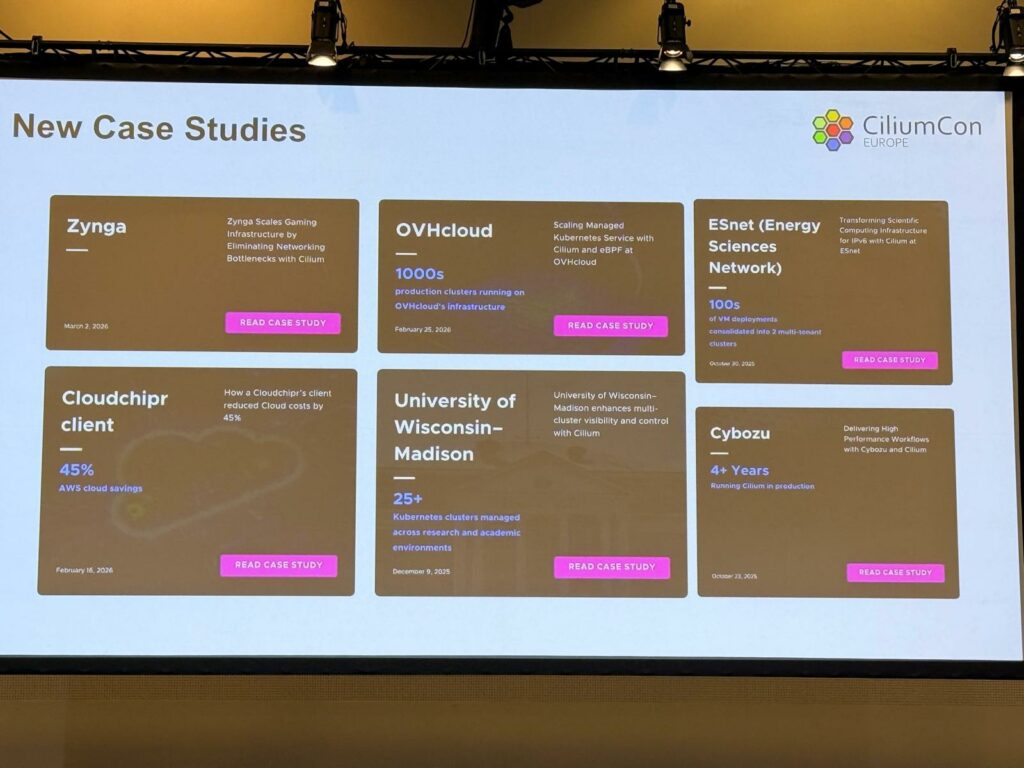
During CiliumCon, we were proud to see the spotlight on our MKS Standard offer 🚀.
OVHcloud Presence
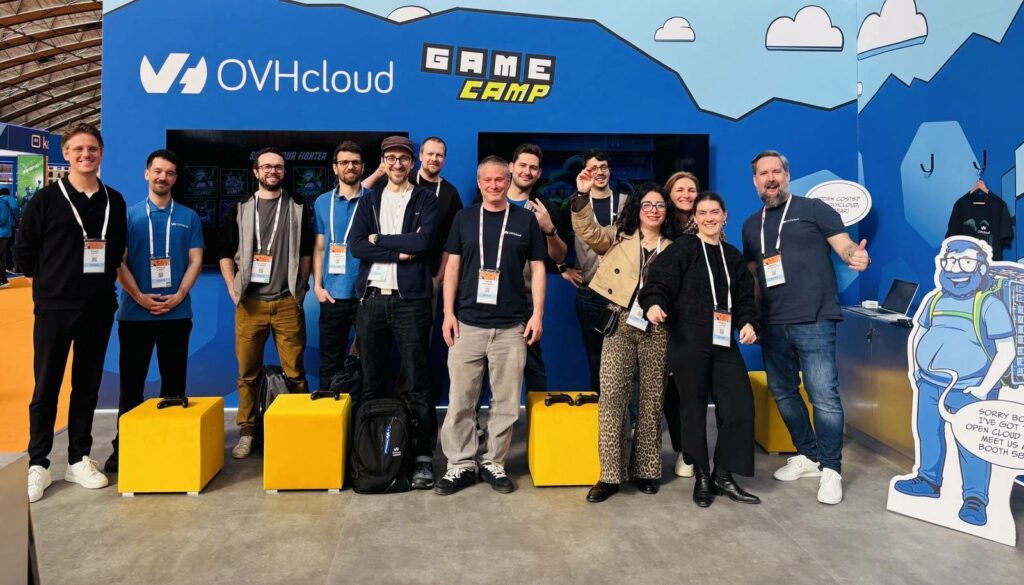
OVHcloud had a strong presence at the event, with two different booths serving two different purposes.
One was located in the Activation Zone, designed as an interactive space to engage with attendees through a video game “Gaming Camp: Beat Cloud Villains!”, described as “Join the fight against the villains of the cloud. Take on Hidden Cost, Jailor Stack, and Autonomous Zero, and prove yourself as a true Guardian of the Cloud.”
Players were welcomed to step into a two-player fighting game inspired by the style of Street Fighter, where strategy and skill are your best weapons. Winners won exclusive t-shirts.
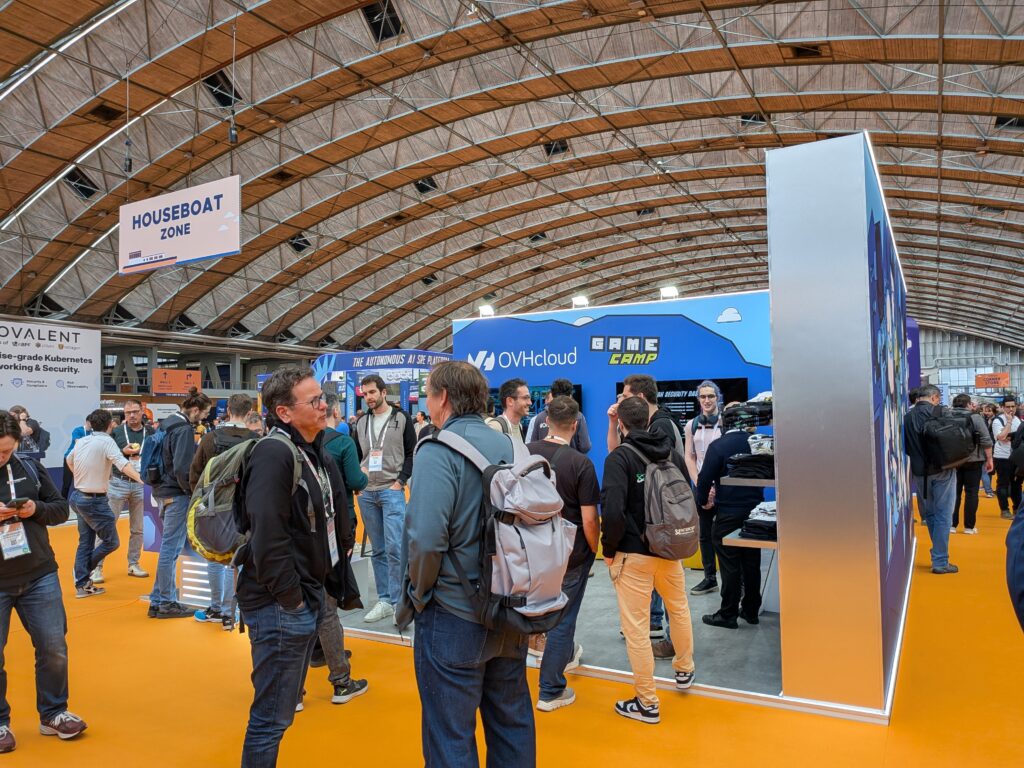
The second booth had a more corporate focus, highlighting OVHcloud’s broader portfolio, strategic positioning, and enterprise offerings. It provided a space for deeper conversations around demos, use cases, and cloud strategies.
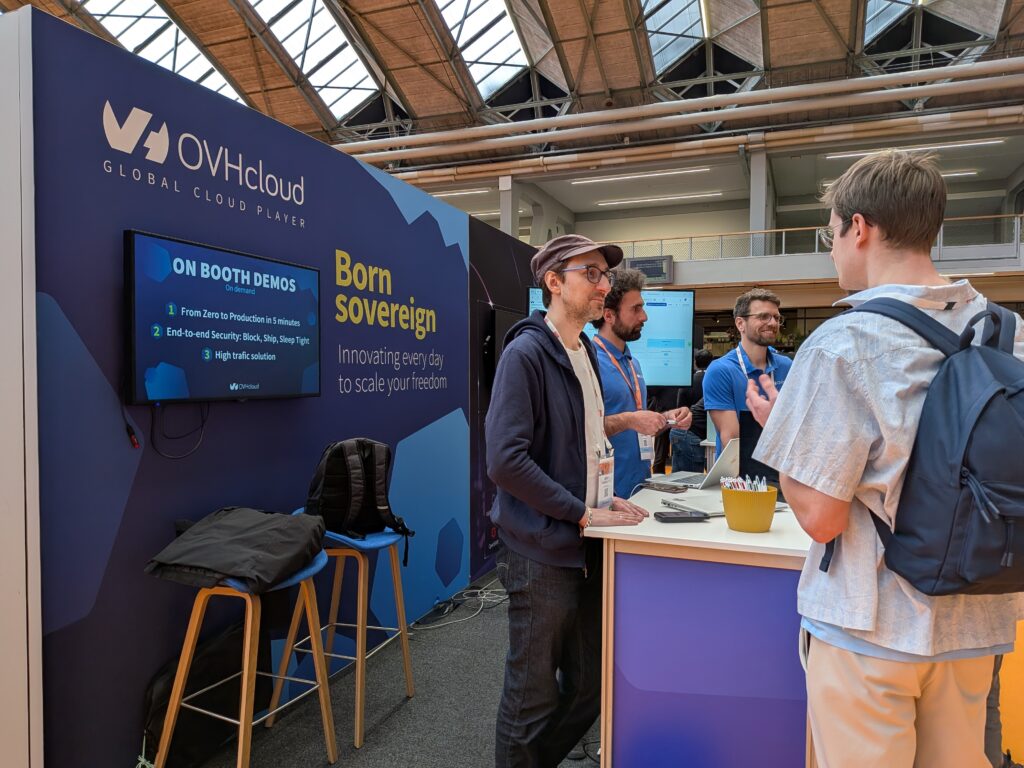
The opportunity was too good to pass up, so we took the chance to interview key players in the ecosystem, as well as customers of our solutions.
We conducted five interviews and had many discussions, and we can’t wait to share them with you soon!
Here’s a sneak peek featuring Sudeep Goswami, CEO of Traefik Labs:
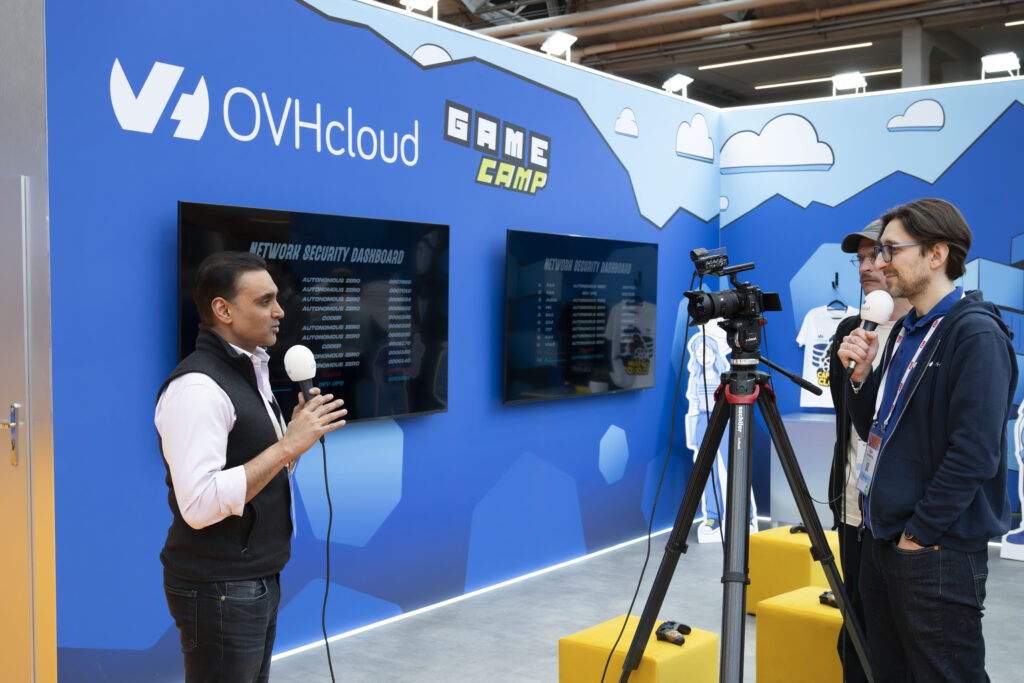
These interviews will soon be available on YouTube, so stay tuned!
Aurélie Vache’s talk
Getting accepted to KubeCon is not easy, and Aurélie, our Developer Advocate and CNCF Ambassador, rose to the challenge by once again presenting a new talk.
“The Ultimate Kubernetes Challenge: An Interactive Trivia Game”:
“Kubernetes has become the de facto standard for deploying and operating containerized applications. We use it, as well as its ecosystem, on a daily basis, but do we know them as well as we think we do?
With a mix of quiz and live demos, come learn and/or improve your knowledge. You will discover (or rediscover) the key concepts of Kubernetes (pods, secrets, services…), internal components but also best practices.
In this fun and dynamic talk, come compete throughout the quiz and explore the wonderful world of Kubernetes.
Icing on the cake: the first will win some swags.“
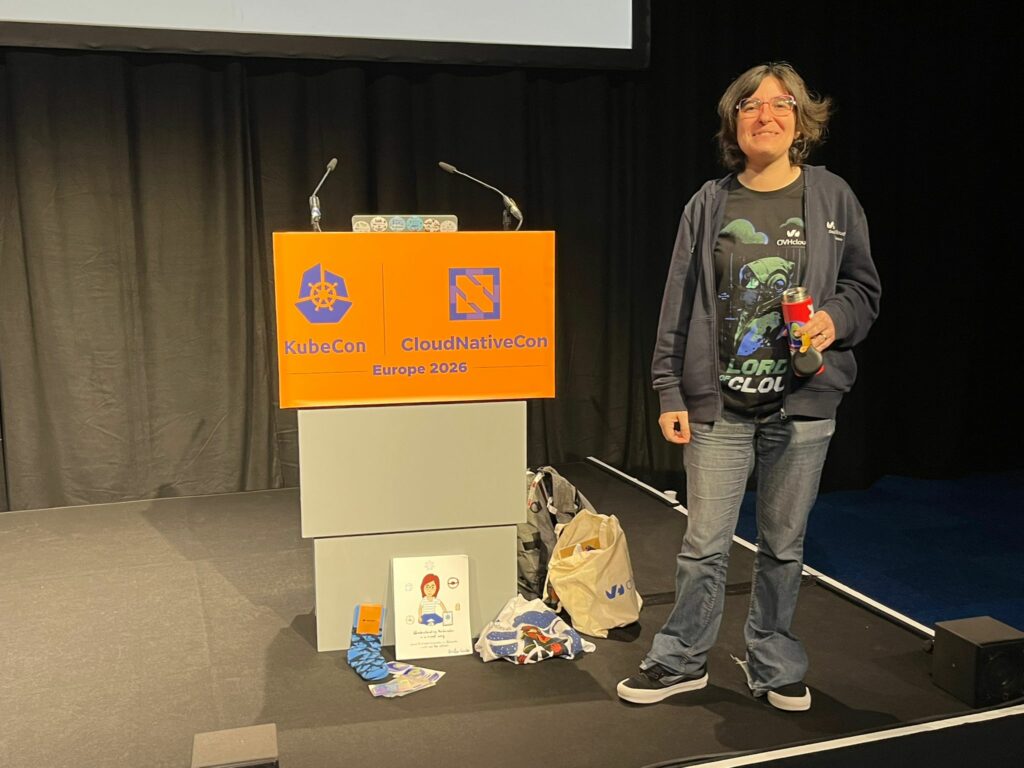
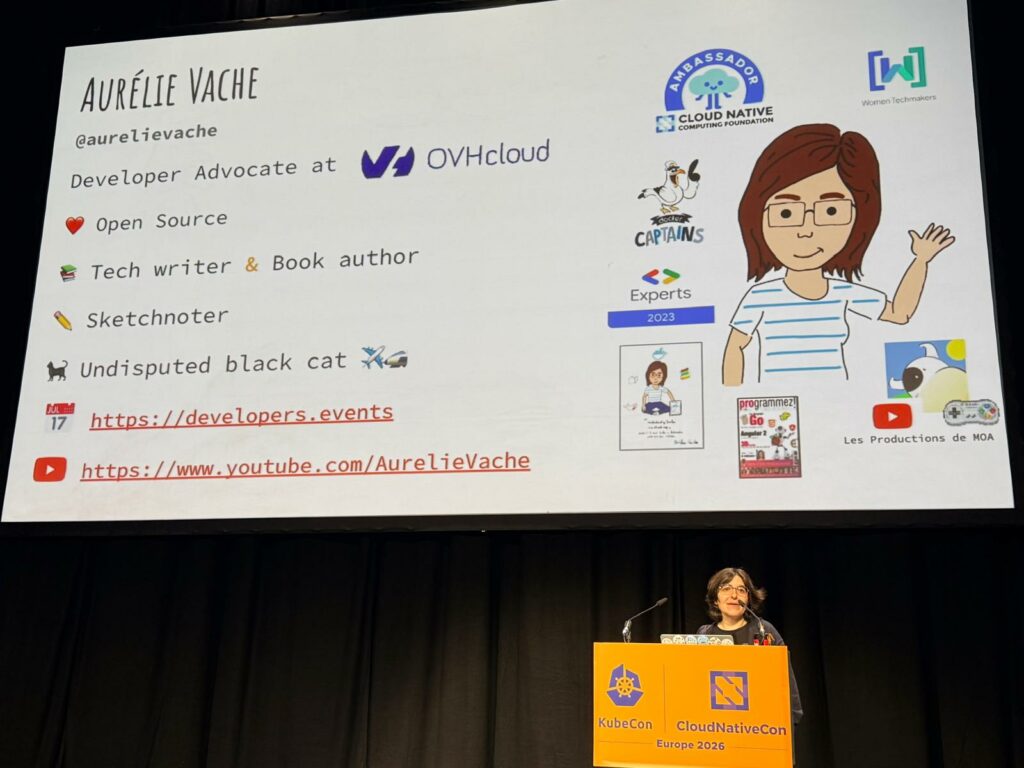
During this talk, attendees tested their Kubernetes knowledge through an interactive quiz, with results presented via illustrated slides and live, hands-on demos.
Giving a talk at 5 p.m., during the final session of the second day, was an ambitious way to finish up. But thanks to the interactive format of her talk, attendees were able to enjoy testing their knowledge while discovering tips about Kubernetes and its concepts and features.
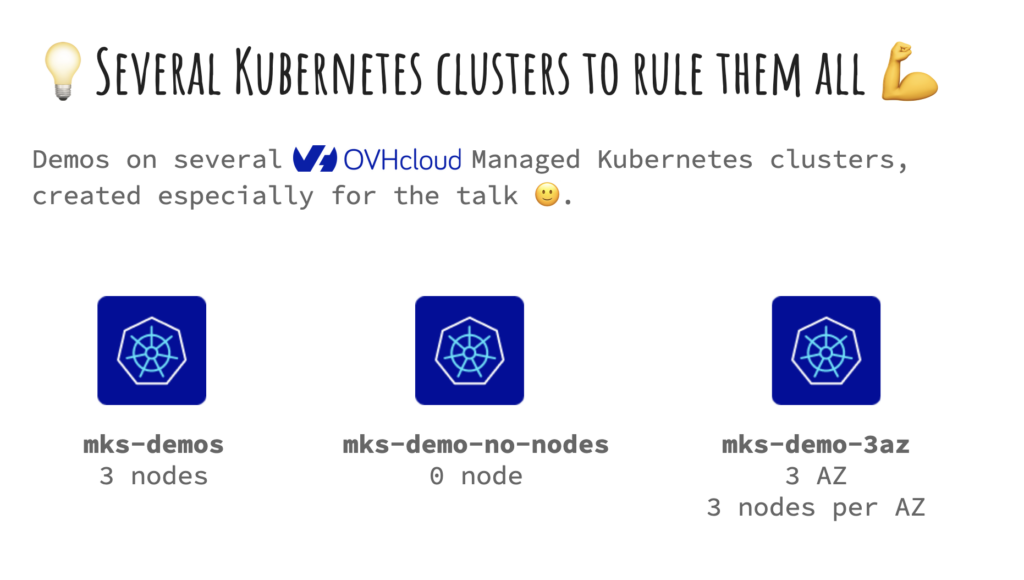
Three OVHcloud MKS clusters were created especially for the occasion, one with 3 nodes, one with zero nodes, and one with 3 nodes across 3 Availability Zones:
Watch the talk here:
Keynotes: Toward “Agent-Based” and Autonomous AI
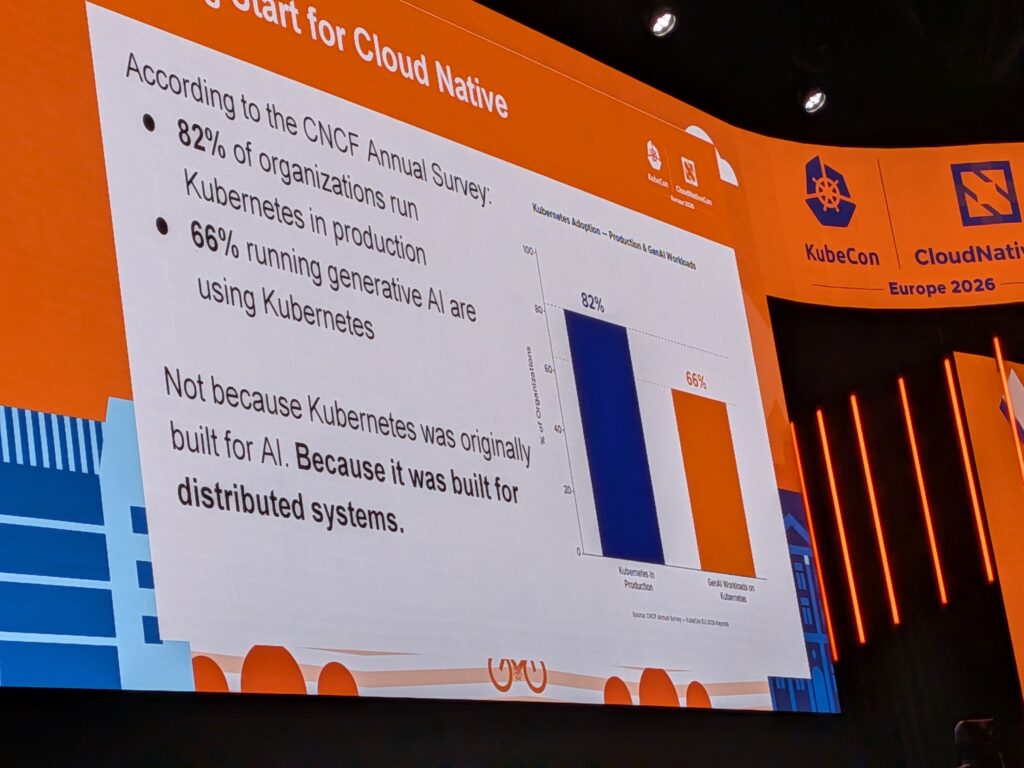
Plenary sessions at the event were dominated by a convergence of Kubernetes and Artificial Intelligence. This term, already ubiquitous in tech news, was bound to be a major focus here. Jonathan Bryce, the Executive Director of Cloud & Infrastructure at the Linux Foundation and an iconic figure in the ecosystem, made a strong point by reminding the audience that while Kubernetes is everywhere (82% adoption rate), AI in production remains a major challenge.
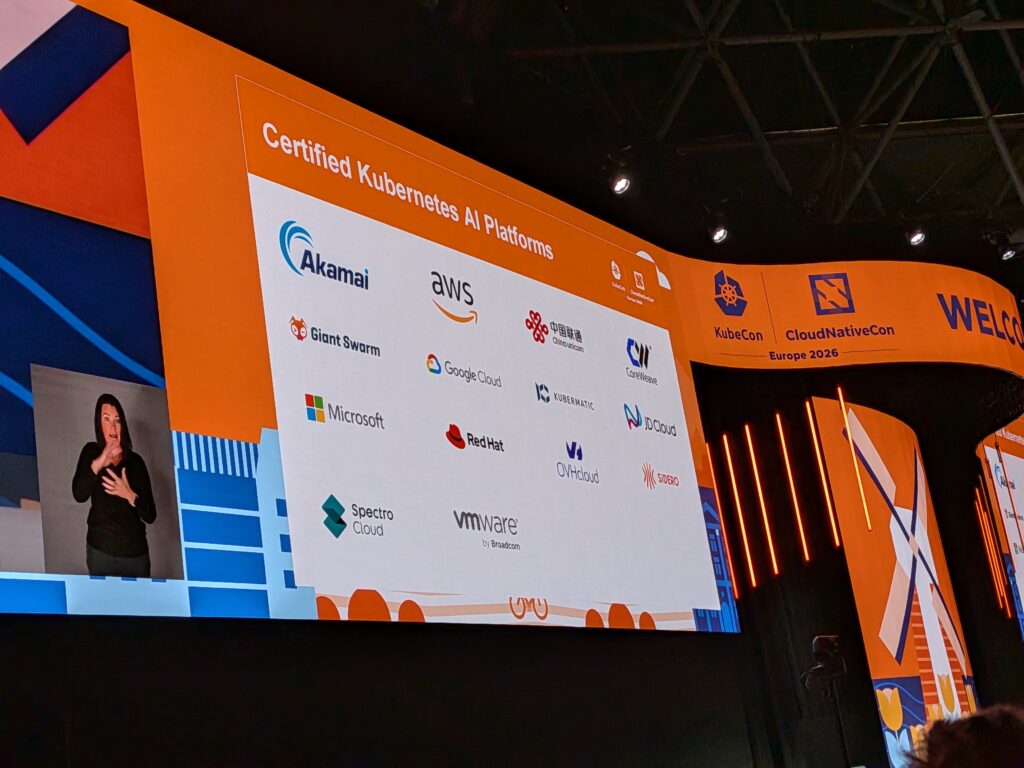
In November, during the latest KubeCon + CoudNativeCon NA at Atlanta, the CNCF launched the “Certified Kubernetes AI Conformance Program to Standardize AI Workloads on Kubernetes“. 5 months later, several companies including the OVHcloud Managed Kubernetes Services (MKS) platform, succeeded this new program with their own certified Kubernetes AI platform.
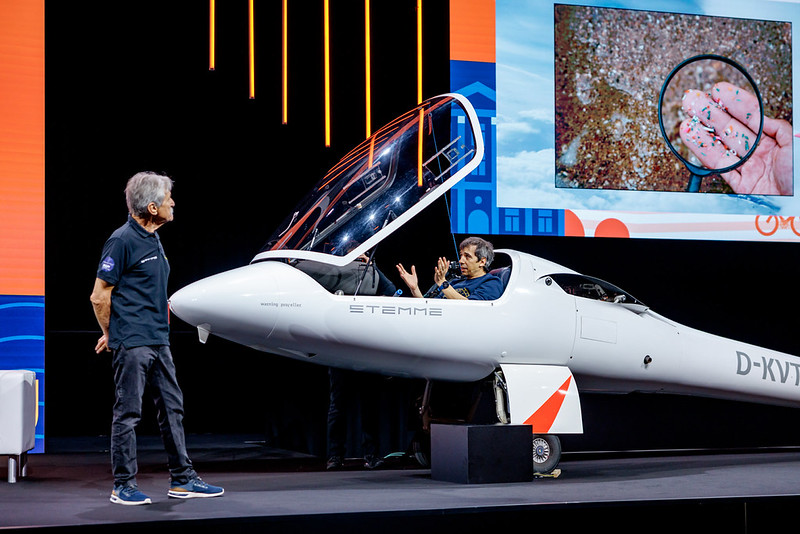
During the keynotes we even saw a real plane!
And to top it off, seeing Michelin present the Top End User Award to SNCF was a real highlight for us. Cocoricoooo! 🇫🇷

Key Trends
Find below the most frequently discussed technical pillars that will remain prominent in the coming months and years:
* Agent-based AI: The focus is shifting from training to inference. The announcement of Dapr Agents 1.0 shows that Kubernetes will now orchestrate agents capable of making real-time decisions on the infrastructure.
* GPU Standardization (DRA): Thanks to NVIDIA’s widespread adoption of Dynamic Resource Allocation (DRA) drivers, GPU scheduling is becoming as simple and granular as CPU scheduling. A boon for cost optimization.
* Sovereignty: Sovereignty is no longer a legal concept; it is an architecture. We have seen a rise in encryption tools for data in transit and at rest (Confidential Computing) natively integrated into CNIs such as Cilium.
* FinOps 2.0: With 67% of AI compute dedicated to inference by the end of 2026, precise monitoring of GPU consumption via projects like Kepler has become essential for the economic viability of projects.
The Gateway API is becoming the standard
As we announced in our blog post “Moving Beyond Ingress: Why should OVHcloud Managed Kubernetes Service (MKS) users start looking at the Gateway API?”, the ingress-nginx controller, the most widely used ingress controller, has now been archived.
Now, after 8 years of development, 275 released versions, and nearly 20k GitHub stars, the maintainers of the Kubernetes Gateway API introduced ingress2gateway v1.0, a tool designed to simplify migration. It automatically converts Ingress resources including annotations into Gateway API resources. The recommended approach remains pragmatic: first migrate the controller while keeping existing Ingress objects, then gradually transition to the Gateway API. Attempting a full migration in a single step is considered risky and unnecessary.
Additionally, Gateway API version 1.5 represents a major milestone: five features have moved from experimental status to the Standard channel in a single release.
Amongst them:
- ListenerSet: delegates TLS listener management outside of the Gateway
- TLSRoute: SNI-based routing in either termination or passthrough mode
- Client certificate validation for mTLS at the ingress layer
- Native CORS filter for HTTPRoute
The Kubernetes Gateway API is now establishing itself as much more than just a successor to Ingress: it is evolving into Kubernetes’ unified network control plane.
Favorite talk
As usual, Aurélie wasn’t able to attend many talks, but among the 2-3 she did see, there was one that really had a “wow” effect on her:
« An immersive and visual journey into kubernetes networking ».
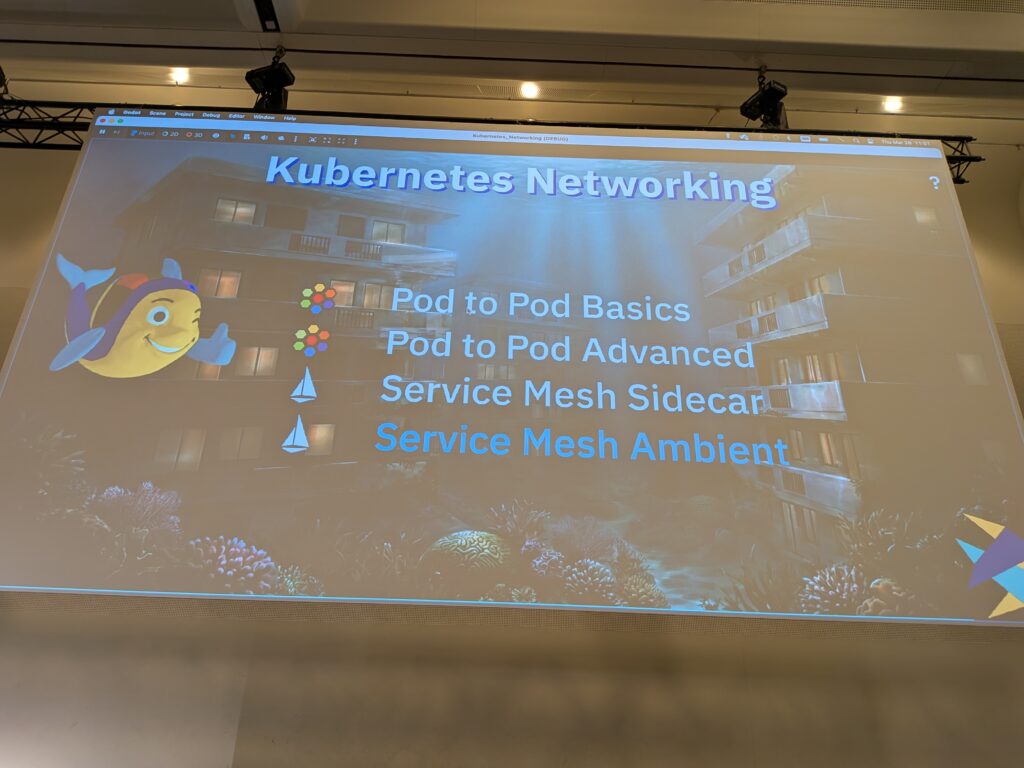
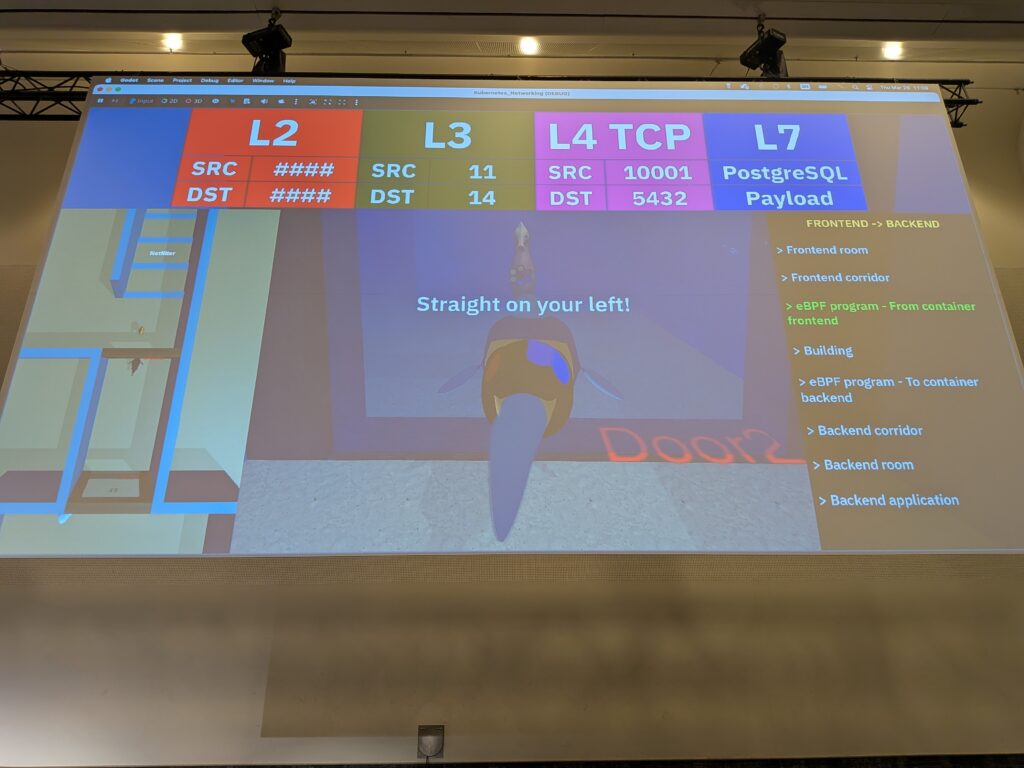
Benoit, a DevSecOps engineer at Feesh in Switzerland with extensive expertise in Kubernetes networking, created a video game using Godot with four levels: “pod-to-pod basics”, “pod-to-pod advanced”, “service mesh sidecar”, and “service mesh with ambient mode”.
Across these four levels, he explains Kubernetes networking in a vanilla setup, then with Cilium and Istio, all from the perspective of a TCP packet, represented as a fish.
Networking and I don’t exactly get along, and I’ll admit I’ve always struggled with it. Even now, although I’ve had no choice but to work with Kubernetes and service mesh, I still find it challenging. But seeing the fish swim from frontend to backend, enter a building underwater (the node), interact with an eBPF program… it really makes things more visual and intuitive.
On Thursday morning, after the keynote, the room with 2000 seats was packed!
Explaining networking by building a 3D game from scratch specifically for the occasion: hats off to you!
Benoit had an issue on stage, because he had built the game in 4K and it didn’t display properly on the projection screen. Luckily, about 30 seconds before showtime, the production team and he managed to fix it. He went on stage without showing any of that stress 💪.
Replay:
KubeCon in 45 seconds
To keep memories of these 3-4 amazing days, we created a “KubeCon Europe 2026 in 45 seconds movie:
Conclusion
KubeCon Amsterdam proved once again that the strength of open source lies in its community.
From the halls of the RAI to the technical sessions, the excitement was palpable. We’re leaving with our heads full of ideas, but above all with the certainty that collaboration remains the key to solving the complex challenges of modern IT. This was particularly evident in the packed conference rooms and the crowded aisles of the exhibition hall.
One thing is certain: the future of Cloud Native is being written together, and we at OVHcloud look forward to contributing to it with you by helping you get the most out of Kubernetes through our managed platform. Because we’re convinced that for businesses in 2026, the challenge will no longer be how to run Kubernetes, but how to use it to innovate faster and better than the competition.

Developer Advocate at OVHcloud, specializing in Cloud Native, Infrastructure as Code, and Developer Experience.
Docker Captain, CNCF Ambassador, Google Developer Expert, and Women Techmakers Ambassador, she has spent more than 20 years helping developers and operators build reliable cloud-native platforms. Passionate about DevOps, Kubernetes, and Go, she shares best practices through technical writing, international conferences, and visual learning resources.
Author of the Understanding Kubernetes, Understanding Docker, and Understanding Istio series, she pioneered a visual approach to learning cloud technologies through sketchnotes, books, and videos.

Rémy Vandepoel
Let's talk servers, instances, containers, and the magic we can do with them!